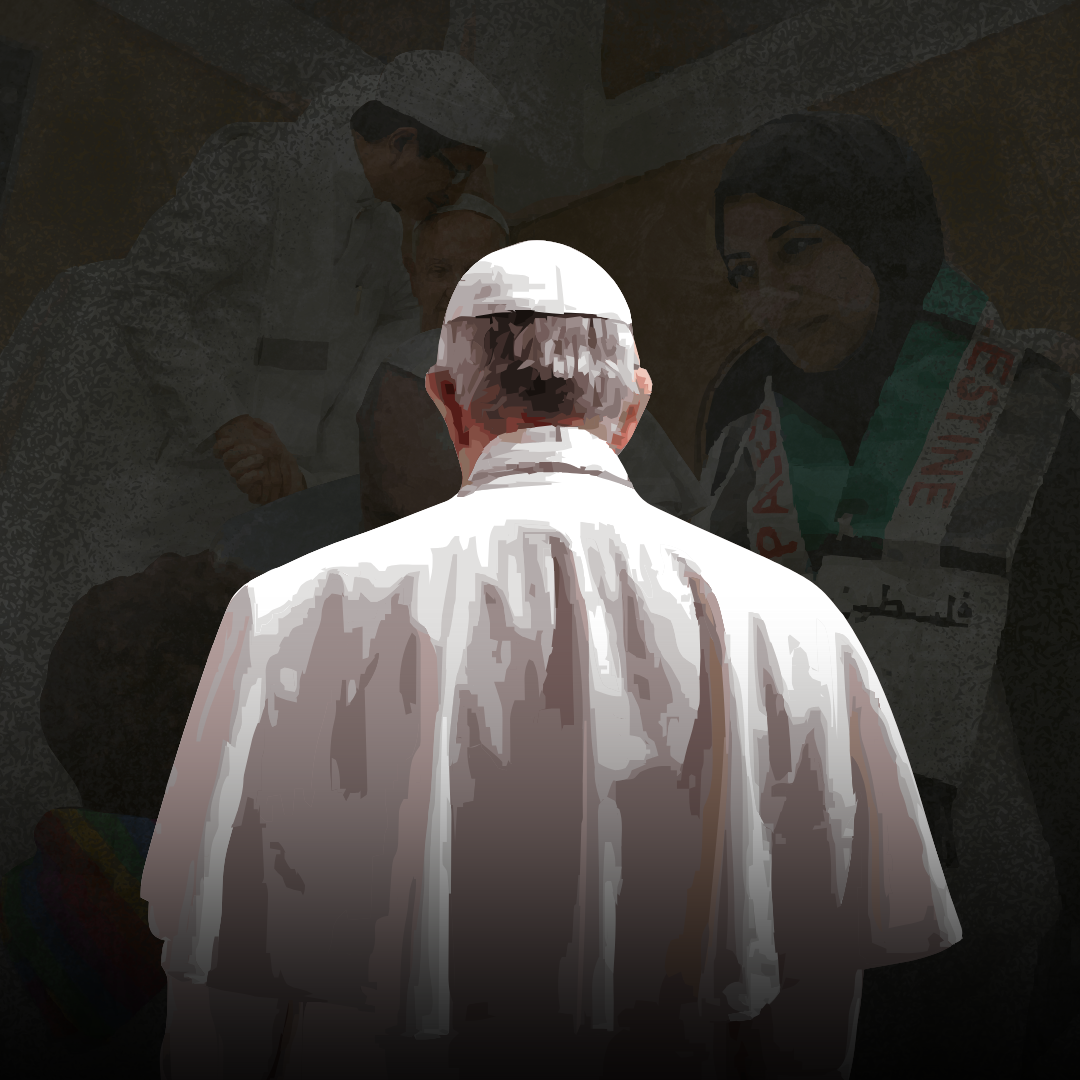
When Jorge Mario Bergoglio stepped onto the Vatican’s balcony in 2013 as Pope Francis — the world saw a pope — but history would come to know a disruptor cloaked in humility, one who would begin dismantling gilded hierarchies in a Church that has stood for thousands of years.
In an era defined by political division, climate anxiety, and widespread inequality, Pope Francis positioned the Catholic Church not as a distant institution but as a voice for the vulnerable. Over more than a decade of leadership, he bridged the sacred and the social, advocating for those on society’s margins and calling the faithful to a deeper sense of global responsibility.
A Radical Voice
Pope Francis’ early life in Buenos Aires formed the foundation of his pastoral outlook. Nicknamed the “Slum Bishop,” he walked the dusty streets of Argentina’s most impoverished neighborhoods, offering Mass in makeshift chapels.
“To be close to the poor is not a political act,” he once said, “it is a Gospel command.”
His advocacy extended to the global stage. In his encyclical Laudato Si’ and public addresses — including a landmark 2015 speech to the U.S. Congress — Francis critiqued what he called “the globalization of indifference.”
Furthermore, he likened unfettered capitalism to a new form of tyranny and called for systems that prioritize dignity over profit.
“An economy that kills is not just,” he declared, pushing for wealth redistribution, environmental justice, and an “integral ecology” that links care for the poor with care for the planet. Such declarations earned him praise from social reformers — and ire from free-market conservatives.
LGBTQ+ Catholics: Inclusion with Limits
Among Pope Francis’s most debated decisions was his 2023 authorization for priests to bless same-sex couples — an act seen by many as a significant pastoral shift, though it stopped short of endorsing same-sex marriage.
“Who am I to judge?”, he asked in 2013, a remark that marked a shift in the Church’s approach to the LGBTQ+ community, favoring pastoral companionship over condemnation.
In 2024, he met with transgender individuals at the Vatican and referred to them as “daughters of God,” a gesture that drew international attention.
Despite these actions, Francis walked a tightrope. He maintained traditional Church teachings that define marriage as a union between a man and a woman and view homosexual acts as sinful. This tightrope —offering pastoral openness while maintaining doctrinal continuity — left many progressives hopeful but frustrated.
Migration: A Church Without Borders
In response to rising nationalism and restrictive immigration policies worldwide, Pope Francis consistently emphasized the dignity of migrants.
He made it clear: In the eyes of the Church, no human being is illegal.
Francis stood firmly against border walls, denouncing policies that criminalize migration.
Whether visiting detention centers or washing the feet of asylum seekers during Holy Week, he demonstrated the Church’s call to “welcome the stranger.”
“We are all migrants journeying toward a common home,” he proclaimed — a stance rooted in Scripture rather than ideology.
Nonetheless, it drew pushback from critics, especially in conservative political circles, who accused him of naivety or even betrayal. But for Francis, defending the dignity of migrants was not political — it was Biblical.
Creation as Sacred: The Ecological Papacy
With Laudato Si’, Francis did what no pope before him had done: he placed climate change at the heart of Catholic teaching.
He decried consumer culture, fossil fuels, and corporate greed, calling the Earth “our common home” and advocating for renewable energy, Indigenous land rights, and ecological justice. Under his leadership, the Vatican pledged to divest from fossil fuels and endorsed global climate agreements.
“We are not God,” Francis warned. “The Earth was here before us and was given to us.”
His vision of “integral ecology” linked care for the planet with care for the poor—resonating with both religious and secular environmental advocates.
Reforming Power from Within
Inside the Church, Pope Francis shook centuries-old structures. With his apostolic constitution Praedicate Evangelium, he reorganized the Roman Curia, expanding the role of laypeople — especially women — in Church governance. The appointment of Sister Raffaella Petrini to a senior Vatican position marked a notable departure from precedent.
His 2023-2024 Synod on Synodality invited lay Catholics to the table, breaking clerical monopolies and encouraging open discussions on topics once considered off-limits, including female deacons, priestly celibacy, and LGBTQ+ inclusion.
Still, critics argue the reforms did not go far enough. Survivors of clerical abuse continued to call for stronger accountability measures, and advocates for women’s ordination and married clergy saw limited institutional change.
Nonetheless, even the small steps taken opened doors once firmly shut.
A Pope of Paradox and Prophecy
Pope Francis never claimed to be a revolutionary, but he did claim to be a shepherd.
In the wake of his passing in 2025, debates over his legacy are far from over: will his successor build on his vision or pivot back to firmer orthodoxy?
With the College of Cardinals increasingly shaped by his appointments — particularly through voices from the Global South — Francis may have already laid the groundwork for a long arc of transformation.
One thing is clear: Pope Francis brought the Church closer to the people. His legacy lies not in rewriting doctrine but in reminding both the Church and the world what mercy truly looks like.