Women can do anything and everything under the sun — even while carrying heartbreak, even while carrying a child. Yet, as much as they could be an unstoppable force, they are too often held back by systems that police their womanhood.
In the Philippines, that weight often comes in the form of cultural traditions, religious expectations, and restrictive laws that continue to govern women’s lives. Reproductive rights remain a contested space: abortion is fully criminalized under the Revised Penal Code, while societal norms still dictate that women must endure and sacrifice.
Within this landscape, stories told on screen often mirror the struggles women navigate off screen.
“Women, they have minds, and they have souls, as well as just hearts. And they’ve got ambition, and they’ve got talent, as well as just beauty. I’m so sick of people saying that love is just all a woman is fit for. I’m so sick of it,” Jo March stated in the movie Little Women.
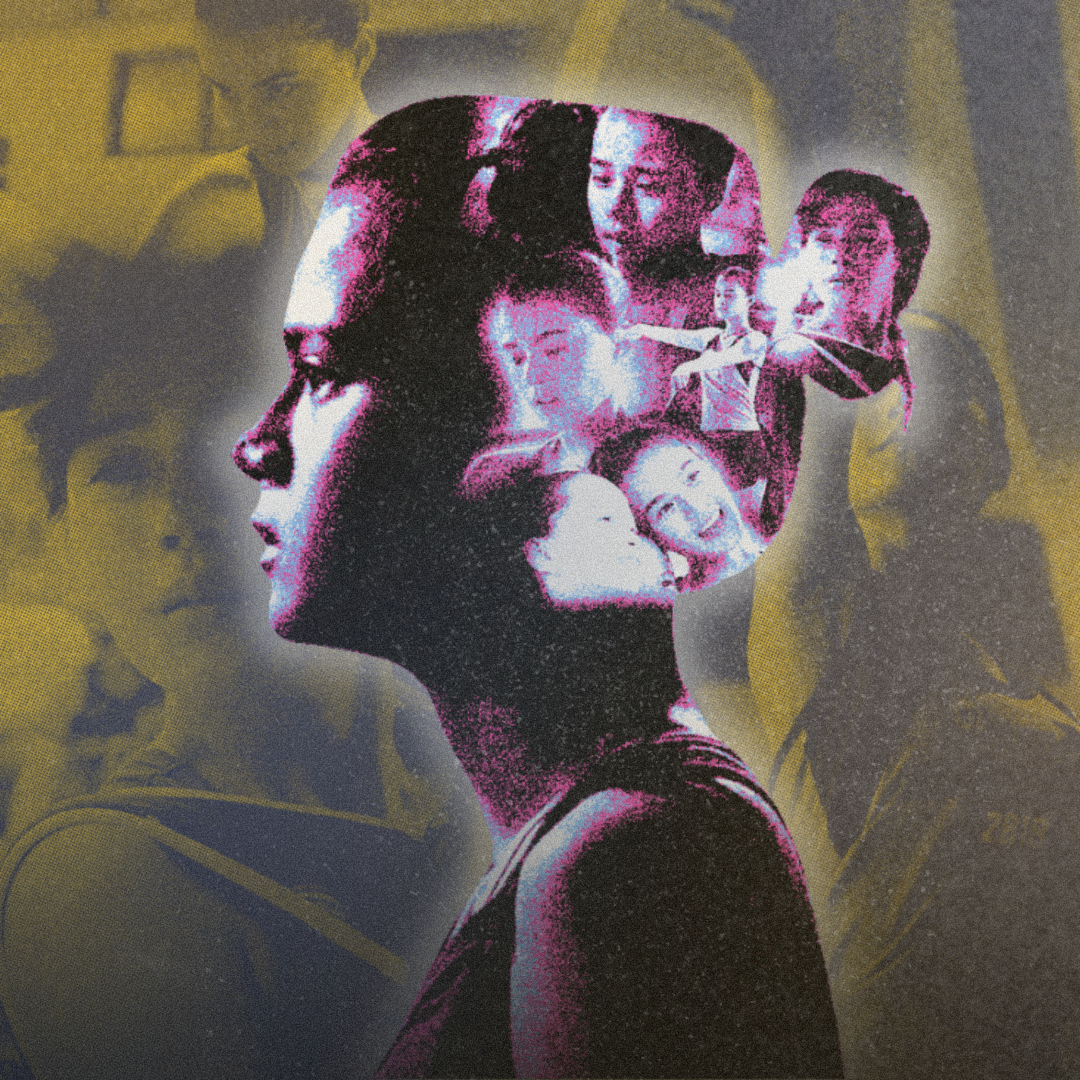
This enduring sentiment resonates in the film Sunshine, directed by Antoinette Jadaone and starring Maris Racal in her first lead role. More than a sports drama, it revisits the weight of traditions that have long dictated femininity in the Philippines. It confronts a culture that insists women’s bodies are not their own, and dares to imagine a young woman carving her own path — even if it means facing loss, stigma, and difficult choices.
The Price of Choice
Sunshine points to Jadaone’s perspective on patriarchal values carried into the present. Rather than merely being a sports drama or a feminist thesis debunking clichés, the film landscapes the life of a dreamer and a “breadwinner” child in the Philippines.
It showcases all the possible emotions one would feel if they were in Sunshine’s position. It focuses on the added pressure, shame, and quiet decision-making women must navigate — her autonomy against the gravity of stigma, the frailty of support, and the reality of economic decline.
The movie puts the lack of reproductive healthcare in a third-world country in the limelight. According to the Center for Reproductive Health, the Philippines remains one of 22 countries in the world where abortion is banned under all circumstances.
Even in the darkest cases of rape, incest, or life-threatening pregnancies, women are denied the most fundamental right — the right to choose.
The Revised Penal Code enforces this, sentencing women who undergo abortion to up to six years in prison; an injustice wrapped in religious justification. But prohibition has never stopped abortions, it only drives them into the shadows, where silence and danger reign.
The Guttmacher Institute reports that about 1.26 million abortions occur annually in the Philippines, most through unsafe methods. Around 1,000 women die each year due to complications, while tens of thousands suffer in silence, denied post-abortion care out of fear and shame.
“I thought I would die,” recalls Maricel, a 23-year-old from Quezon City interviewed by Likhaan Center for Women’s Health. “I drank herbal concoctions because I couldn’t afford a doctor. When I was bleeding heavily, the nurse at the public hospital told me, ‘Kasalanan mo yan.’”
Her experience is one of thousands, a deafeningly silent epidemic of moral policing that punishes women not for wrongdoing, but for the weight of society’s stigma.
In a 2022 Human Rights Watch report, another woman — “Ana,” a 27-year-old mother from Leyte — recounted being turned away by two hospitals after a miscarriage because doctors suspected she had induced it. By the time she was finally admitted, she had lost so much blood that her uterus had to be removed.
“They didn’t see me as a patient,” she said. “They saw me as a criminal.”
The World Health Organization has repeatedly warned that restrictive abortion laws do not reduce abortion rates; they only make abortions unsafe. Yet in the Philippines, morality masquerades as policy, and compassion is criminalized.
Like Sunshine, women like Maricel are boxed in by a system that preaches virtue while withholding compassion. The Church dictates morality, the state enforces it — leaving women to wonder where, if anywhere, they have a say over their own bodies.
The Violence of Poverty
In Sunshine, the protagonist’s decision is not driven by indifference but by desperation — a gymnast and breadwinner crushed between survival and sacrifice. Her story mirrors those of real women cornered by economic despair.
For Sunshine, abortion became the only option left to save her dreams. It was not a choice she could easily dismiss or “toss aside.” Poverty, in her world, was not just a lack of money. It was the barrier that kept her from the care she should have been able to access. Long hours of work and the burden of an unplanned pregnancy only deepened the realization that she might never be able to provide.
Her moral journey is marked by her aspirations to make it to Nationals and her effort to overcome hesitation. She succeeded — but at a cost. Sunshine achieved everything she had long dreamed of, but lived with the guilt and the attachment to the “could-have-been” that lingered long after. After all, she is only human.
Her encounter reflects a reality faced by many Filipinas: when circumstances make abortion not only a choice but a necessity, compassion is often withheld. Women, especially the poor, are left with limited options and forced to carry the consequences alone.
The same Guttmacher study found that 54% of pregnancies in the Philippines are unintended, and nearly half end in abortion. Among these, three out of four women cite poverty as the primary reason — they simply cannot afford to raise another child. When contraception is inaccessible and abortion illegal, choice becomes an illusion.
Despite the Responsible Parenthood and Reproductive Health Act of 2012, commonly known as the Reproductive Health Law, promising access to modern contraceptives and sex education, conservative resistance, misinformation, and local bans continue to undermine its reach.
As of 2023, one in four Filipino women aged 15–49 still lack access to modern family planning, according to UNFPA Philippines. Furthermore, according to its 2022 report, the Philippines has 71 unplanned pregnancies per 1,000 women annually, placing it 56th out of 150 countries.
“Many unintended pregnancies happen despite a woman’s best efforts. It happens usually as a result of unequal social and economic conditions that women face that lead to unintended pregnancies,” UNFPA Country Representative Dr. Leila Saiji Joudane stated, emphasizing the existing but unspoken stigma around women that is engraved deep into lived systems.
“There is a systemic discrimination against women and girls. This is an unseen crisis unfolding right before our eyes, and a global failure to uphold basic human rights for women and girls,” she concluded.
Sunshine’s story, then, is not just hers — it mirrors the everyday negotiations women make in silence, caught between survival and stigma.
The denial to acknowledge blatant discrimination against women opens the wound deeper and wider, proving that the burden of morality is heavier when you are poor, when your gender is treated as subpar, when religion is law, and when dreams come with a price tag.
The Call for Autonomy
Sunshine neither glamorizes nor condemns abortion. It humanizes it. It asks: what kind of society forces women into impossible choices, then punishes them for surviving them?
The moral dilemma is not about evading responsibility but about confronting a system that denies responsibility for women’s lives.
Sunshine’s compassion for another pregnant teen — younger, impregnated by a relative — reveals that this is not a question of faith or sin. It is a question of survival.
Sunshine’s struggle is the struggle of countless women, silenced not only by law but by shame, yet she carries her choice with quiet dignity. Her story is a reminder that morality is not black and white, and that compassion spills in a rich blue, eradicating condemnation.
Existing laws in the country enforce stigma in the act, denying women institutional support while forcing them to navigate life-altering choices in secrecy. Instead of being protected, women are punished.
The film exposes this system and, in doing so, challenges viewers to reimagine a society where autonomy is a right, not a privilege. That includes recognizing that until women are free to make choices without fear or shame, every dream will carry the shadow of what had to be sacrificed to pursue it.
And yet, even in this constrained reality, women continue to resist. They will continue to carve spaces where dignity and choice can no longer be denied. Whether society chooses to listen or not, this struggle will shape the future — and it will not wait for permission.