They say this is the day God is dead.
But in this country,
He has been dying every night.
Candles inside the church stand straight in obedience, their flames trembling only for those whose names are easy to forgive. Wax drips gently — grief measured, controlled, acceptable.
But outside, the wax never reaches the pavement.
Because out here, mourning is not a right.
It is a privilege.
Here lies the boy where the shadows gather.
With no white cloth to cover him — only the thin memory of breath that once pleaded between clenched teeth.
Here, the concrete cradles him like a reluctant mother, still warm from the echo of gunfire that split the night into something permanent.
They said he ran.
They always say he ran.
As if fear were a crime punishable by bullets.
As if the body’s instinct to live were an admission of guilt.
His hands are open —
not holding a weapon,
not holding salvation,
only the shape of a question
no one wants to answer.
“Who will mourn for thee?”
It lingers like incense, thick and suffocating, curling into the lungs of a nation that has learned how to breathe selectively.
Inside the chapel, a priest speaks of sacrifice —
of a man who died for all.
All.
The word echoes, but it fractures before it reaches the street.
Because outside,
“all” has conditions.
A mother stands at the edge of the crowd that refuses to gather.
Her grief is too loud for prayer,
too stained for sympathy.
She does not wail.
Even sorrow must know its place here.
Her tears fall quietly, careful not to offend the living.
They told her, her son was a sinner.
They told her this was justice.
They told her God sees everything.
So she wonders —
Did God watch when they dragged him into the dark?
Did God hear when he said he had exams the next day,
as if tomorrow could still be negotiated?
Or has heaven also learned
to look away?
The posters come quickly.
Faces printed in black and white,
eyes frozen in a kind of innocence that only death seems allowed to prove.
But the streets are faster.
They rewrite the dead in whispers:
Adik.
Pusher.
Nanlaban.
Words sharper than bullets,
because they do not just kill the body —
they bury the soul beneath accusation.
On Black Saturday,
the tomb is meant for one.
But here,
the graves multiply —
quietly, endlessly.
In this country,
redemption is not given freely.
And resurrection —
even more so.
So the candles continue to burn
for the worthy.
And the silence continues to stretch
for the rest.
“Who will mourn for thee?”
The question is asked again,
softer now,
as if afraid of its own answer.
No one steps forward.
Black Saturday does not end.
It lingers in every alley
where a body once fell
and a story was buried with it.
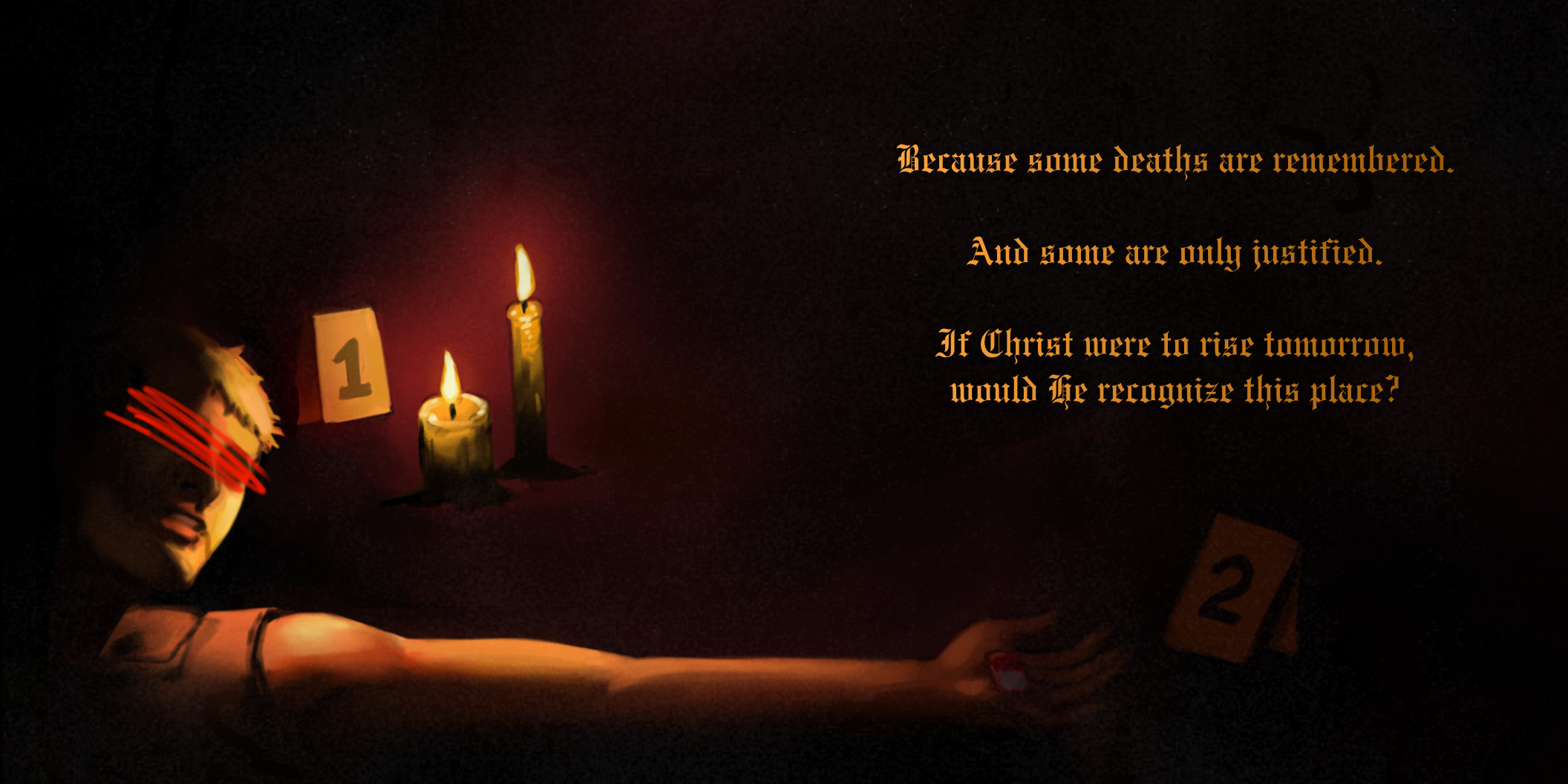
Because some deaths are remembered.
And some are only justified.
If Christ were to rise tomorrow,
would He recognize this place?
Or would He, too,
be named,
judged,
and left unmourned
on the street?