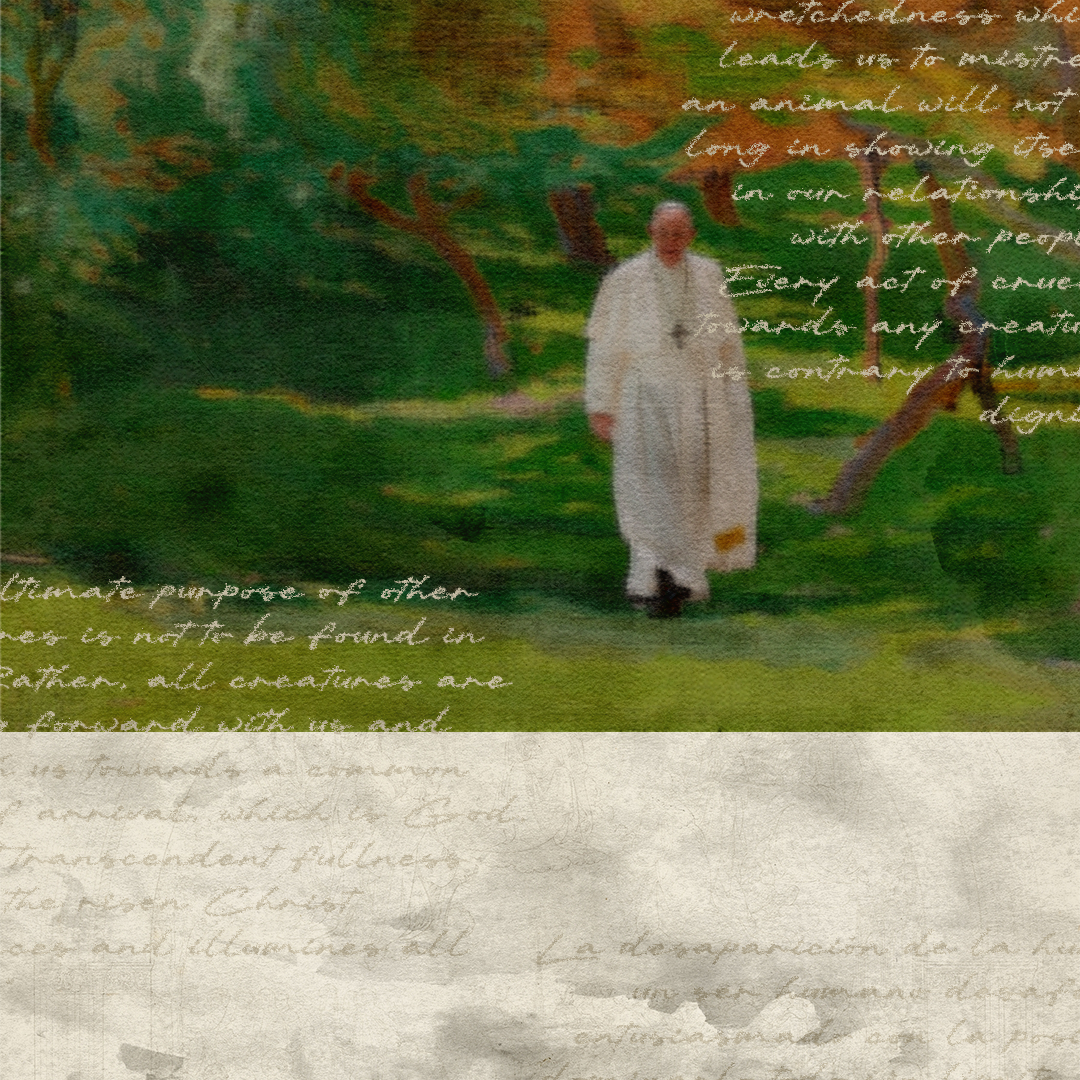
Literature opens its arms to all — and to appreciate it is to embrace meaning wherever it is found, regardless of the author’s faith, background, or intent. In much the same way, Laudato Si’, the encyclical by the late Pope Francis, transcends its religious origins.
More than a doctrinal letter, it stands as a literary, scientific, moral, and theological appeal: a profound meditation on humanity’s broken relationship with nature, and an urgent call for environmental stewardship — a testament that one need not share a faith to find wisdom in its pages.
Pope Francis’ legacy is marked not only by his moral leadership but also by his deep concern for the planet.
Echoing that legacy, Laudato Si’ speaks to anyone who seeks deeper understanding, justice, and meaning as it addresses timeless issues such as climate change, poverty, inequality, and ultimately how human greed and corruption lie at the root of them.
Ahead of its time, Laudato Si’ is widely recognized as the first encyclical devoted primarily to environmental concerns, setting a new precedent for Catholic social teaching papal documents. Crying out for global action to care for “our common home,” it emphasized how climate change disproportionately harms the poor and marginalized, linking ecological collapse to systemic social injustice and global inequality.
Although authored by a theological and doctrinal authority, Laudato Si’ stands out among Pope Francis’ works for its profound and far-reaching influence. Unlike his previous writings, this ecology-centered encyclical resonated not only within the Catholic Church but also across secular, environmental, and academic communities.
Its reach extended into popular culture, inspiring the documentary The Letter, which has amassed over 8.9 million views as of 2025. Beyond viewership, Laudato Si’ sparked significant global conversations about moral responsibility, ecological justice, and the ethical dimensions of environmental stewardship.
Indeed, Laudato Si’ holds enduring value — not just as a theological reflection, but as a moral, philosophical, and practical call to action. Its worth lies in how it challenges readers to rethink humanity’s role in the ecological crisis.
Grounded upon that, let us explore a central question: how does a religious text bridge the gap between moral reasoning and tangible action, especially when confronting the pressing social realities it so vividly presents?
To our common home
The 184-page encyclical serves as a prelude to the seven pressing realities endangering humanity’s shared home — Mother Earth — under what Pope Francis calls “rapidification,” the continuous acceleration of global changes.
Foremost among those seven concerns are pollution and climate change.
Pollution, in many forms — from air contamination to industrial emissions — stems from a “throwaway culture” that prioritizes convenience over sustainability. This mindset is starkly illustrated by the overwhelming presence of single-use plastics and the growing crisis of e-waste, both of which clog ecosystems and threaten public health.
Closely tied to pollution is climate change, a global crisis driven by human activity, marked by rising sea levels, extreme weather, and threats to biodiversity. The Pope calls humanity to urgently transform lifestyles and consumption to tackle these root causes.
This urgency echoes Pope Francis’ critique of the “compulsive consumerism” embedded in modern economies. It manifests visibly in the rise of the “sachet economy,” where corporations, such as Coca-Cola, promote single-use plastic sachets that flood communities and oceans.
This model not only accelerates environmental degradation but also disproportionately affects the poor — those whom Laudato Si’ calls the “most vulnerable victims” of ecological harm.
Access to clean water, recognized as a fundamental human right by the United Nations General Assembly in 2010, remains a critical global issue. Water scarcity and pollution disproportionately affect impoverished communities, a reality that Pope Francis underscores when he warns of a “grave social debt towards the poor who lack access to drinking water.”
Nearly 5 million people still rely on unsafe water sources according to a 2021 report of the British Geological Survey in the Philippines — a problem compounded by privatization struggles.
Controversies involving companies like Manila Water and Maynilad have sparked debates on whether basic services should be treated as commodities rather than public goods, further marginalizing low-income households.
Biodiversity loss — fueled by rampant deforestation, relentless pollution, and escalating climate change—is pushing countless species to the brink of extinction. According to the Intergovernmental Science-Policy Platform on Biodiversity and Ecosystem Services (IPBES), nearly one million animal and plant species now face extinction, many within decades.
Pope Francis warns that “each year sees the disappearance of thousands of plant and animal species that we will never know, that our children will never see.”
In the Philippines, where more than half of known species are found nowhere else on Earth, illegal logging and habitat destruction continue to devastate fragile ecosystems. Behind every vanished species lies a deeper wound — one that fractures the communities that depend on the land and seas for food, culture, and survival.
Pope Francis mourns the disruption of ecological balance, warning that these crises jeopardize both nature and humanity’s survival.
Despite rapid technological advancement, urbanization has often led to worsening pollution, overcrowded living spaces, and declining quality of life. In the Philippines, Metro Manila — ranked among the most densely populated urban areas globally — battles persistent air pollution, inadequate green spaces, and a surge in informal settlements.
Laudato Si’ highlights how ecological degradation fragments the social fabric, breeding violence, drug addiction, and a profound loss of cultural and personal identity, a trend visible in rising crime rates and mental health struggles across rapidly urbanizing nations.
As Pope Francis notes in Laudato Si’, “the poor and vulnerable are the first to suffer the impact of environmental destruction,” showing how environmental and social degradation are deeply connected, with the poorest suffering the most. The wealthiest, often the largest contributors to ecological damage, remain largely insulated, prompting a reevaluation of global consumption and its impact.
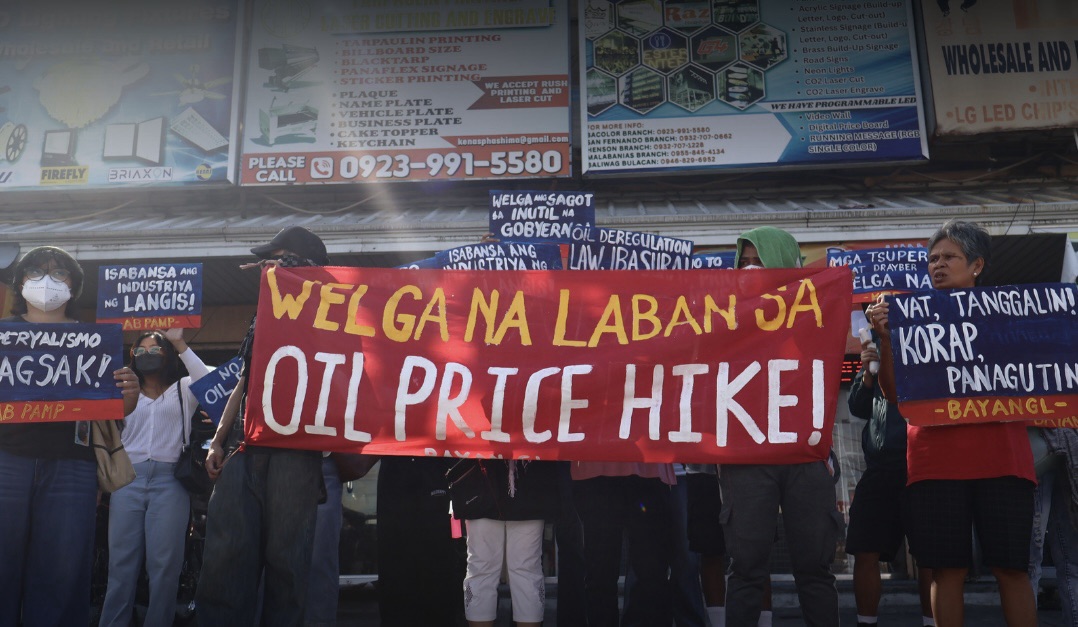
Efforts to address environmental degradation have been insufficient, hindered by political inertia, economic self-interest, and reluctance to change entrenched systems.
For example, the 2009 Copenhagen Climate Summit failed to reach binding agreements on emissions due to political disagreements, while the 2015 Paris Agreement’s non-binding targets have allowed continued inaction. Economic pressures, especially from the fossil fuel industry, further undermine progress, as seen in ongoing oil and gas expansions despite the climate crisis.
Pope Francis calls for a renewed commitment to protecting the environment through open, honest dialogue and comprehensive solutions that prioritize the common good. However, ideological rigidity — where entrenched beliefs or political agendas prevent meaningful compromise — remains a significant barrier to progress.
Blessed Pope Paul VI once warned that unchecked human activity — particularly industrialization, overconsumption, and environmental exploitation — would lead to ecological degradation, making humanity both the cause and victim of its own downfall.
His message remains relevant: many environmental crises are the result of human choices, not natural occurrences.
This self-inflicted destruction manifests not only in environmental devastation but also in social and moral consequences, as communities and ecosystems suffer the long-term effects of our actions.
Within and beyond religion
Laudato Si’ is more than a call for environmental awareness — it is a theological proclamation. As the author, Pope Francis grounds his message in sacred texts, Gospel teachings, and reflections that connect faith with ecological responsibility.
Stewardship is not only directed towards God but also toward the Earth, which people are called upon to nurture and care for. In Genesis, for instance, a garden was placed for humans to tend and cultivate, underscoring the importance of preserving the Earth.
Through interconnectedness, harmony is established, forming a web of life where individuals are seen as brothers and sisters, centered on respect and communion, as exemplified by Saint Francis of Assisi.
Rooted in the principle that the Earth belongs to all, Laudato Si’ challenges systems of greed, inequality, and overconsumption. Promoting social justice requires ensuring equitable access to resources and restructuring systems that concentrate wealth and power in the hands of a few.
Pope Francis boldly asserts that true ecological healing demands ‘profound changes in lifestyles, models of production and consumption, and the established structures of power.’ This call urges not just individual action but collective transformation — a holistic reforming of economic and political structures that have long held back ecological advancement.
Human roots to its modernism advancements
In this era of profound transition, humanity has inherited the fruits — and burdens — of two centuries of rapid technological development.
From steam engines to biotechnologies, this progress reflects a deep-seated tension in the human condition: the desire to transcend limitations, often without regard for ethical or ecological consequences.
Central to this discussion is what the Pope terms the “Technocratic Paradigm” — a framework that exalts a subject who, through logical and rational procedures, seeks to master and control the external world. At its core, this paradigm positions technology as the central meaning of existence.
This paradigm does more than complicate modern life — it threatens ethical integrity. By reducing nature to a commodity and prioritizing profit over people, it deepens inequality and neglects the moral imperatives of justice, compassion, and stewardship.
As Pope Francis writes, “The basic problem goes even deeper: it is the way that humanity has taken up technology and its development according to an undifferentiated and one-dimensional paradigm.”
The rise of artificial intelligence illustrates the ongoing dominance of the technocratic mindset.
In an article by Anthony Cardillo, it was noted that 40% of countries report daily AI use, while 82% are still navigating its implications and potential. Pope Francis cautions, “When media and the digital world become omnipresent, their influence can stop people from living wisely, thinking deeply, and loving generously.”
A striking example of this is the proliferation of deepfakes. In the Philippines, false AI-generated videos have spread, including those promoting counterfeit medicines using fabricated endorsements from well-known personalities.
A recent incident illustrates this risk: a viral AI-generated video falsely promoted a counterfeit medicine using the deepfaked likeness of a trusted media personality Dr. Willie Ong. Debunked by Rappler, this incident reveals how digital manipulation can endanger public health, erode trust in institutions, and prey upon citizens’ fears — all in pursuit of profit.
Pope Francis also critiques anthropocentrism — the belief that humans are the ultimate measure of all things. This mindset reduces nature to a mere commodity and legitimizes environmental abuse. While technocracy centers on technology, anthropocentrism sees nature merely as a resource to be used.
For instance, when forests are cleared for monoculture plantations without regard for biodiversity, or when oceans are overfished to satisfy insatiable consumer demand, the ecosystem suffers and human life is ultimately imperiled.
This relentless drive for consumption, seen in practices like fast fashion or the exploitation of natural resources by extractive industries, perpetuates cycles of environmental degradation and social imbalance, reinforcing a culture of overconsumption that is driven by the pursuit of profit over people.
In response, Pope Francis calls for a moral and spiritual framework to guide humanity through technological and economic development. This framework must prioritize the common good and uphold the dignity of every person.
He proposes the concept of integral ecology, which seeks to illuminate the interconnections among social issues affecting humanity. For instance, it stresses the importance of protecting employment while pursuing environmental goals — advocating for solutions that preserve both ecological integrity and human livelihoods.
Ultimately, true change, as the Pope suggests, requires profound personal transformation — a shift in lifestyle, values, and vision. This is what he refers to as ecological conversion.
“We forget that the inalienable worth of a human being transcends his or her degree of development,” Francis explains. This statement urges a rethinking of progress — one rooted in dignity, compassion, and shared responsibility. In an age where technology can easily outpace conscience, what we need most is not smarter machines, but wiser humans.
As within, so without
The letter, despite being written a decade ago, remains strikingly relevant to the contemporary issues the world faces today. With the escalating climate challenges, particularly the increasing heat index in the Philippines — reaching up to 40 degrees Celsius — it is clear that such conditions pose significant risks to the population, leading to various detrimental effects.
As one of the world’s most climate-vulnerable nations, the Philippines endures devastating consequences: rising sea levels that swallow coastal barangays, super typhoons that displace thousands overnight, and erratic weather patterns that disorient farmers and fisherfolk alike.
According to the 2023 INFORM Risk Index, the country ranks 11th globally in climate risk, a ranking that reflects not only its exposure but also its institutional fragility.
Francis underscores that these challenges are largely the result of human actions. One glaring manifestation of this human-induced crisis is the country’s plastic waste epidemic. The Philippines is the third-largest contributor to ocean plastic pollution globally, dumping over 2 million tons each year. Urban waterways are choked with sachets and single-use plastics, while marine life suffocates beneath a tide of consumer convenience.
The overarching aim of the encyclical letter is to raise awareness among the masses, urging them to confront the harsh realities of the world’s current state. It challenges individuals to internalize the planet’s suffering as their own and, through that recognition, inspire collective action.
It is through this shared anguish that people may awaken to the urgent need for change and take responsibility for the future.
Ultimately, Pope Francis invites humanity to rediscover its moral agency — to recognize that the path forward lies not in technological fixes alone, but in ethical reorientation. In the end, the most powerful tool we possess is not innovation, but intention — rooted in the common good.