“Kaya po tayo nandidito para tayo naman ang manlaban pero sa mapayapang paraan. Walang hawak na baril, manlaban para sa katotohanan.”
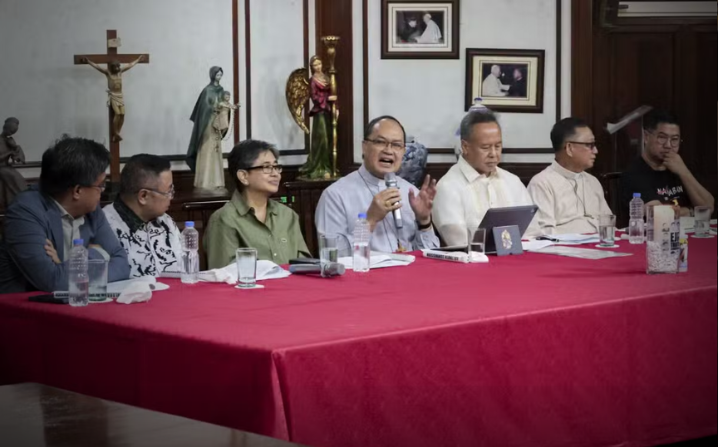
Civilian-led groups formally launched an extrajudicial killings (EJK) Truth Commission to investigate and document deaths linked to former President Rodrigo Duterte’s anti-drug campaign amid continuing calls for accountability and justice, May 27.
The commission, composed of church leaders, legal experts, human rights advocates, and forensic specialists, aims to gather testimonies from victims’ relatives, survivors, and law enforcement officers involved in anti-drug operations following conflicting accounts over the true death toll of the drug war.
While official government records maintain that approximately 6,200 drug suspects were killed during legitimate anti-drug operations, independent international human rights organizations estimate the total toll may exceed 30,000, citing alleged vigilante-style executions, systematic cover-ups, and unreported killings.
Acting as a response to institutional gaps, the commission also seeks to bring together the Catholic Church and civil society organizations to pursue truth and seek reparations for the families of drug war victims.
Named as central convenor and adviser of the commission was Cardinal Pablo Virgilio “Ambo” David, bishop of Kalookan and president of the Catholic Bishops’ Conference of the Philippines (CBCP).
During the launch, Cardinal David said the civilian-led group aimed to uncover truths and reclaim terminology often used by authorities to justify the killings.
“The truth that was buried together with the people who were said to have ‘fought back’. The phrase ‘nanlaban’ carries a heavy weight. We forget that they were human beings like us,” he explained.
He issued an urgent call to action, emphasizing that historical accountability cannot be delayed.
“Bigyan natin ng boses, ng tinig, ang mga nawalan. Pakinggan natin ang kanilang mga kwento. Gunitahin natin ang kanilang buhay. Ilawan natin ang katotohanan,” the cardinal added.
He further said the commission is not intended to replace the International Criminal Court (ICC) or domestic courts as avenues for justice.
Alongside Cardinal David, former ICC Judge Raul Pangalangan, who served the court from 2015 to 2021, has been appointed as chair of the commission.
Pangalangan noted that the body is fiercely independent of government control and will focus on truth-seeking rather than direct prosecution, though its findings will support future accountability efforts.
“I would like to emphasize that, for the ICC, the end of the process is of course either the acquittal of the accused or a declaration of guilt, and eventually reparations for the victims,” said Pangalangan.
He also criticized the historical institutional failures that allowed the violence to persist, pointing out that there was “almost a conspiracy of silence among government entities.”
Also included among its members are forensic pathologist Dr. Raquel Fortun, trauma and psychosocial support specialist Dr. Al Fuertes, Vincentian priest Fr. Daniel Franklin Pilario, and independent human rights researcher Carlos Conde.
The body is scheduled to hold public hearings and release findings every six months to institutions such as the National Police Commission, Congress, and the Office of the President, and will also issue recommendations.
Cardinal David concluded by stressing that national healing remains impossible without acknowledging the trauma left by the killings.
“Hangga’t may sugat na patuloy na nagdurugo at hangga’t hindi kinikilala ang mga sugat, lungkot, trauma, at pangungulila, hindi rin po tunay na makapaghilom ang ating bayan,” said the cardinal.