For a world defined to be ever-changing and evolving — one defined by deepening political divisions, moral ambiguity, and a crisis of meaning — institutions like the Catholic Church stand at a delicate crossroads — one that puts a challenge in it maintaining its known steep traditional holds while keeping up with the call of the times.
A “difficult and complex turning point in history,” as Cardinal Giovanni Batista Re, dean of the College of Cardinals, defined in his homily on the “Pro Eligendo Romano Pontifice” (for the election of the Roman Pontiff) Mass on May 7, where he likewise implored that the next pope be “whom the Church and humanity need” at this point.
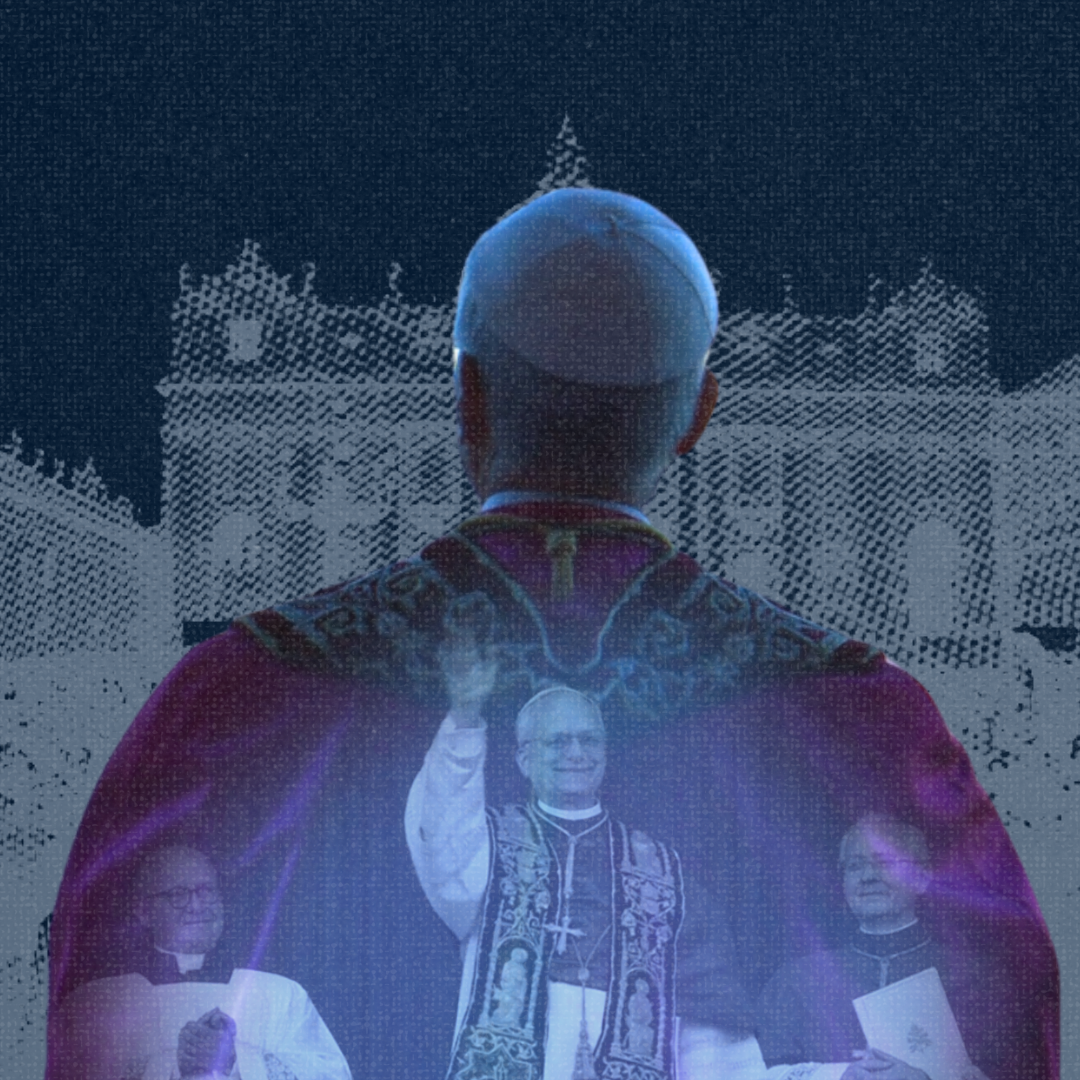
As the Church moves forward with the 133 cardinal-electors around the world concluding the conclave, this heavy duty is put upon the shoulders of the first American pope — Cardinal Robert Prevost, now Pope Leo XIV, the 267th supreme pontiff of the Roman Catholic Church.
Before the White Robes
Before entering the Sistine Chapel on May 7, Pope Leo XIV, as Robert Francis Prevost, was a Chicago-born clergyman who held key positions for advancing the Catholic faith in Latin America. He joined the Augustinian mission (he is also the first pope from the said order) in Peru in 1985 and served as head of the Augustinian Seminary in Trujillo.
He also was a known advocate for migrants, the poor, and those on the fringes, having led a pastoral community in far-flung areas of Peru.
In 2014, he was then assigned by Pope Francis the post of apostolic administrator, and later in 2015, as the official bishop, of Chiclayo, Peru. As a bishop up to his consecration as cardinal on September 30, 2023, he was also the president of the Pontifical Commission for Latin America — posts that seem to have indicated Francis’ trust in his soon-successor to maintain the region where they both have roots and where the majority of the Catholic faithful live.
Leo XIV was also the prefect of the Dicastery for Bishops, the Roman Curia arm that oversees the selection of bishops.
From being a Peruvian missionary to a pope, what seems to be clear for a Leo XIV papacy is this: his leadership of the Church will be motivated by a deep pastoral grounding, and one that will further advance Catholicism as a mission to commit to the once unseen and those who have been continually struggling.
What’s Ahead for the Church
Fourteenth pope to be called Leo, he succeeds Leo XIII, a known social reformist and monickered “Pope of the Working Class,” to adopt the name.
Like Leo XIII, the new pope likewise is a supporter of the marginalized, especially migrants. This is shown when he voiced his special care for the over 1.5 million Venezuelan migrants in Peru, having been described by Jesus Leon Angeles, coordinator of a Catholic group in Chiclayo, as “a person who likes to help.”
Recently in April 2025, he denounced the deportation policies and attacks against immigrants by the Trump-Vance Administration in the US, sharing a post on X (formerly Twitter) that reads, “Do you not see the suffering? How can you stay quiet?”

In the heightening calls to act for climate change, Leo XIV is also reported to carry the same passion as his immediate predecessor, Francis, carried for the environment. In a November 28 seminar in Rome, then-Cardinal Prevost said, “‘Dominion over nature’ — the task which God gave humanity—should not become ‘tyrannical.’ It must be a ‘relationship of reciprocity’ with the environment,” stressing the immediate need to act for climate action.
“Without fear, united, hand-in-hand, with God among ourselves, we go forward,” Leo XIV said in his first appearance as pope.
But while all those cares have been seen with the new shepherd of the faithful, will the Church really go forward in his papacy?
While known for commitment to pastoral work for poverty and chastity as an Augustinian, Pope Leo XIV has been known to stand conservative on some key issues in today’s time.
Over some of the advocacies that his predecessor Francis “radically” acted and stood upon, like the inclusion of same-sex unions in particular, the new Roman pontiff was noted in 2012 to stand in contrast to the said, citing “homosexual lifestyle” and “families comprised of same-sex partners” as “at odds with the gospel.”
He also opposed the teachings of gender ideology in schools when he was a bishop in Chiclayo, saying that “The promotion of gender ideology is confusing, because it seeks to create genders that don’t exist.”
Issues involving sexual abuse cases can also be highlighted in his background, where Leo XIV faced controversies over “covering up” sexual abuse cases. In March 2025, the Chicago-based Survivors Network of those Abused by Priests (SNAP) submitted a letter to the Vatican on the “inaction” of Leo XIV for allowing sex abusers to stay in the ministry as priests.
An instance about the said is former Providence Catholic H.S. President and priest Richard McGrath being allowed to stay at the high school despite sexual abuse allegations in the 1990s, when then-Prevost had the oversight in leadership roles for midwest Augustinians, according to Eduardo Lopez de Casas, vice president of SNAP.
Standing ambiguous as of his selection as the pope over these issues, Leo XIV’s papacy is standing both in hope and question: hope that the poor and the oppressed are given the most care and uplifting by the Church, but question as to whether the Church will be willing to confront its own contradictions to remain credible in a deeply fractured world.
Now donning his white regalia, Pope Leo XIV’s leadership will be more of a definition, than a title. His leadership will define whether the Church moves further forward towards radical inclusion, or backwards towards its traditional past — bound by the rules it historically upheld and less for being an embracing home for its people.
It may all be too unclear for now what road the Church will choose, but one thing is set: for the new pope to navigate the “complex world” we have now, the step the faithful aspire the pope to take is the one to the roads of inclusion for those who have been excluded in history, and to not take steps backwards where faith becomes blindsided and not a welcoming solace for the people.