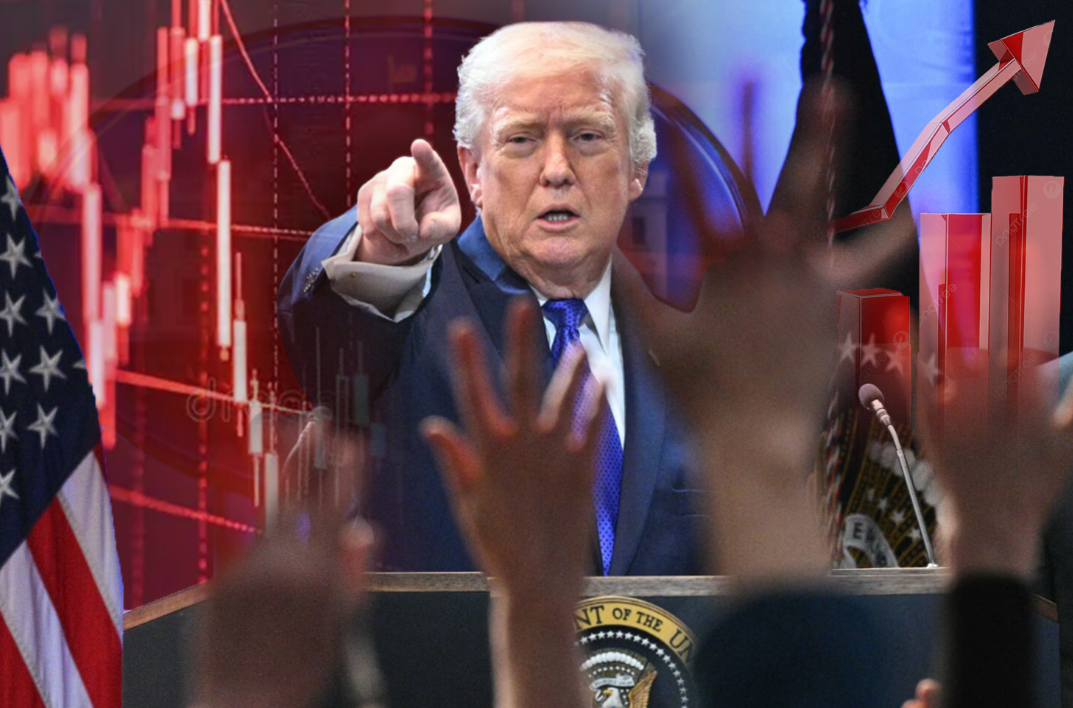
United States (US) President Donald Trump imposed a 12.5% tariff over Philippine export goods following the latter’s failure to “effectively enforce a forced labor import prohibition,” July 24.
The decision, announced by the Office of the United States Trade Representatives (USTR), followed an investigation of top 60 US trading partners under Section 301 of the Trade Act of 1974, which addressed issues affecting US commerce.
According to the USTR’s findings, the Philippines was unsuccessful in securing safeguards over goods produced with forced labor.
The Philippines is among 41 other countries that were subjected to the 12.5% tariff after failing to establish a forced labor import prohibition.
Other countries affected include China, Japan, South Korea, Australia, Singapore, Thailand, Vietnam, Brazil, and Saudi Arabia among others.
“The US has had a forced labor import ban for nearly a century, and rigorously enforces it. It’s well past time for our trading partners to do the same,” said USTR Ambassador Jamieson Greer.
The US remained as the Philippines’ largest export market, reaching $13.44 billion in 2025 or 15.9% of the country’s total exports.
The new tariff is expected to affect Philippine exporters and businesses that rely on the US market.
In response, the Philippine government has begun reviewing its policies on forced labor-related trade with those of the US in hopes of securing more favorable tariff rates in the future.
In an interview with the Philippine Daily Inquirer, Philippine Exporters Confederation Inc. (PHILEXPORT) President Sergio Ortiz-Luis Jr. stated the tariff may encourage local exporters to diversify their markets instead of relying heavily on the US.
Ortiz-Luis also criticized the US decision, saying Trump “does not even consider that the Philippines is an ally of the United States” in implementing the new tariff policy.
In an interview with the BBC, US trade expert Caroline Freund stated that the reason behind the heightened tariffs is “not about forced labor.”
“I think they were looking for a legal reason to put the tariffs in and that they can maintain them because their goals and Greer has been very clear about this, as has Trump, is about the trade deficit and it is about US manufacturing, it is not about forced labour,” she stated.
Tariffs are taxes imposed on imported goods, often resulting in higher costs for exporters and increased prices for consumers and businesses in the importing country.