Sapphic women have been handed a contradiction they did not write and cannot opt out of: be invisible enough to not threaten anyone and visible enough to be consumed by everyone — hypersexualized by men who will only ever see them as objects and dismissed by the institutions that refuse to recognize what they have.
Sapphic love is either consumed as fantasy, erased as a fact, or condemned as a sin — sometimes within the same news cycle or by the same person. It seems as if society has decided, with remarkable consistency, that the love between women belongs to everyone except the ones living inside it.
Fire is supposed to mean warmth. But for them, it has come to mean exposure. Their desire is treated less like a truth they are entitled to and more like fuel, struck for someone else’s pleasure, then stamped out the moment it threatens to mean something on its own.
To love another woman in a world that never granted her the right to define is to carry a particular weight — one marked by a tenderness the public refuses to witness and a hypervisibility she neither asked for.
Male gaze has a genre
In Pornhub’s year-end report for 2025, “lesbian” was named as the platform’s most viewed category worldwide. It climbed three spots from the year before, the same period when “queer” searches rose to 132% and “bisexual” to 88%.
That ranking should mean something — a woman loving a woman watched by millions ought to translate into a culture that recognizes the relationship behind the act.
Unfortunately, it does not.
The category is built almost entirely by and for men, written without a single sapphic woman in the room, then sold back to the world. A fixation that has almost nothing to do with women loving women and everything to do with men watching them perform it.
Film theorist Laura Mulvey, in her 1975 essay Visual Pleasure and Narrative Cinema, coined the term “male gaze” to describe what happens when visual media is calibrated around a presumed heterosexual male viewer.
Feminist scholars have since applied the term to lesbian cinema and pornography, arguing that camera angles, pacing, and even intimacy itself are staged according to what is most legible and desirable to an outside observer.
One example of this is the 2013 film Blue Is the Warmest Colour, adapted from a 2010 graphic novel by lesbian author Julie Maroh and directed by Abdellatif Kechiche.
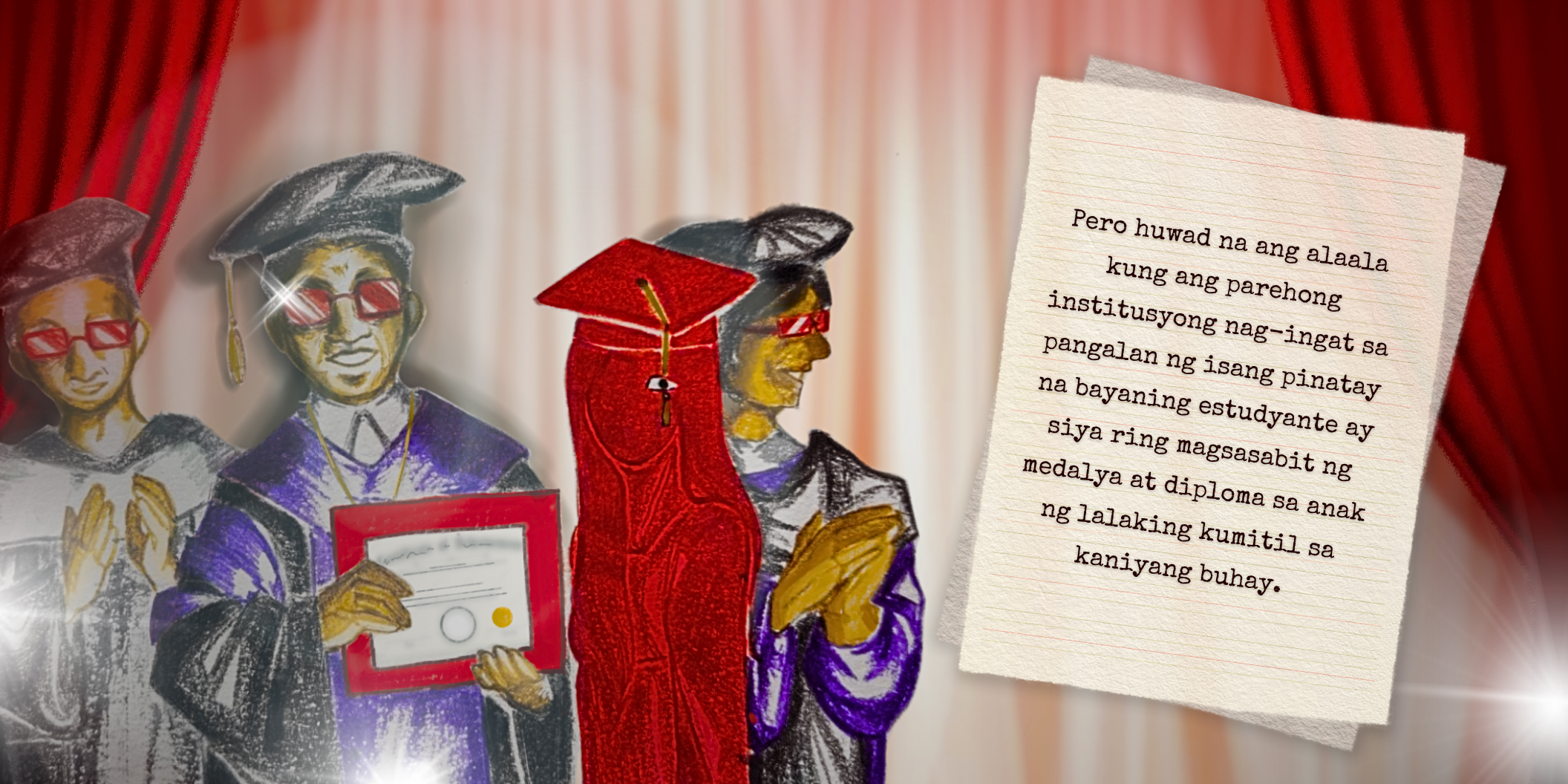
A straight man working with two straight lead actresses won the Palme d’Or at Cannes after roughly 800 hours of raw footage were trimmed down to a three-hour runtime built around one extended, much-debated sex scene between its two women.
Critics described the result as voyeuristic and a projection of male fantasy rather than a realistic account of women loving women. Maroh herself said afterward that the one thing genuinely missing from the set had been actual lesbians.
Sapphic love is tolerated exactly to the degree that it performs for someone outside it. Drunk girls kissing at a party for an audience of cheering men get called fun, but the same kiss, when exchanged quietly between two women in a real relationship, gets called a phase or a confusion — something to be talked out of.
An almost identical reflex plays out in the Philippines, where a common response to learning a woman is lesbian takes some version of “Sayang ka, maganda ka pa naman,” as if her attraction to women were a waste of beauty that should have belonged to men.
Moreover, advocacy groups have documented a recurring pattern of straight men approaching lesbian couples, believing they can “turn them straight.” Filipino lesbians have shared similar encounters, with men pursuing them even after learning they have girlfriends, treating their orientation less as a fact than as a preference still open for negotiation.
It is a kind of flirtation built on the premise that a woman’s love for another woman is provisional or available, waiting for the right man to argue her out of it.
Less aggressive versions of the same belief appear as disguised compliments of “You two are so hot together.” While it seems flattering, such remarks convert a sapphic relationship into a viewing experience for a male gaze.
The same people would feel entitled to ask which one is “the man,” or if they’ve ever “tried” one. Some would even go beyond to demand, without irony, if they can watch.
According to Ilan Meyer’s Minority Stress Model, this toll takes shape and becomes a kind of chronic excess stress generated not by sexual orientation itself, but by the unglamorous daily labor of moving through a world engineered to be hostile toward it — having to anticipate rejection, calculate the safety of concealing yourself, and absorb fetish and disgust as two expressions of the same refusal to see the relationship as ordinary.
Even the algorithm functions with the same bias in platforms such as Facebook, Instagram, TikTok, YouTube, and Twitter.
GLAAD’s 2023 Social Media Safety Index found that these platforms all scored low on LGBTQ+ safety for the second consecutive year, falling short on enforcing protections against hate speech. Even the platforms’ own moderation systems continue to suppress the legitimate LGBTQ+ content they claim to protect.
Every genre assigns its characters an ending before they’ve had any say in the writing of it, and that has been the throughline underneath all of this. The gaze has a genre, and it knows exactly what role it wants two women to play.
What remains strangely radical, then, is the refusal to perform that role and the insistence that their love belongs to them alone.
Prayers for the woman she might have been
Although Generation Z has been claimed as “woke” with the normalization of sapphics, a lot of people are still engaged with the cultural norms and roles of women. As someone comes out with their cold feet from the dark, quiet, and empty closet, voices from their families have already started whispering in their ears.
At the dinner table, sapphic women sit with fear and shame because of the possibility that they would be questioned about their sense to their family. A sapphic woman’s family might think that their precious daughter would just make sense if she married a rich man who could provide for them, if she became a wife who kept the house, or even just if she was married to a man at all.
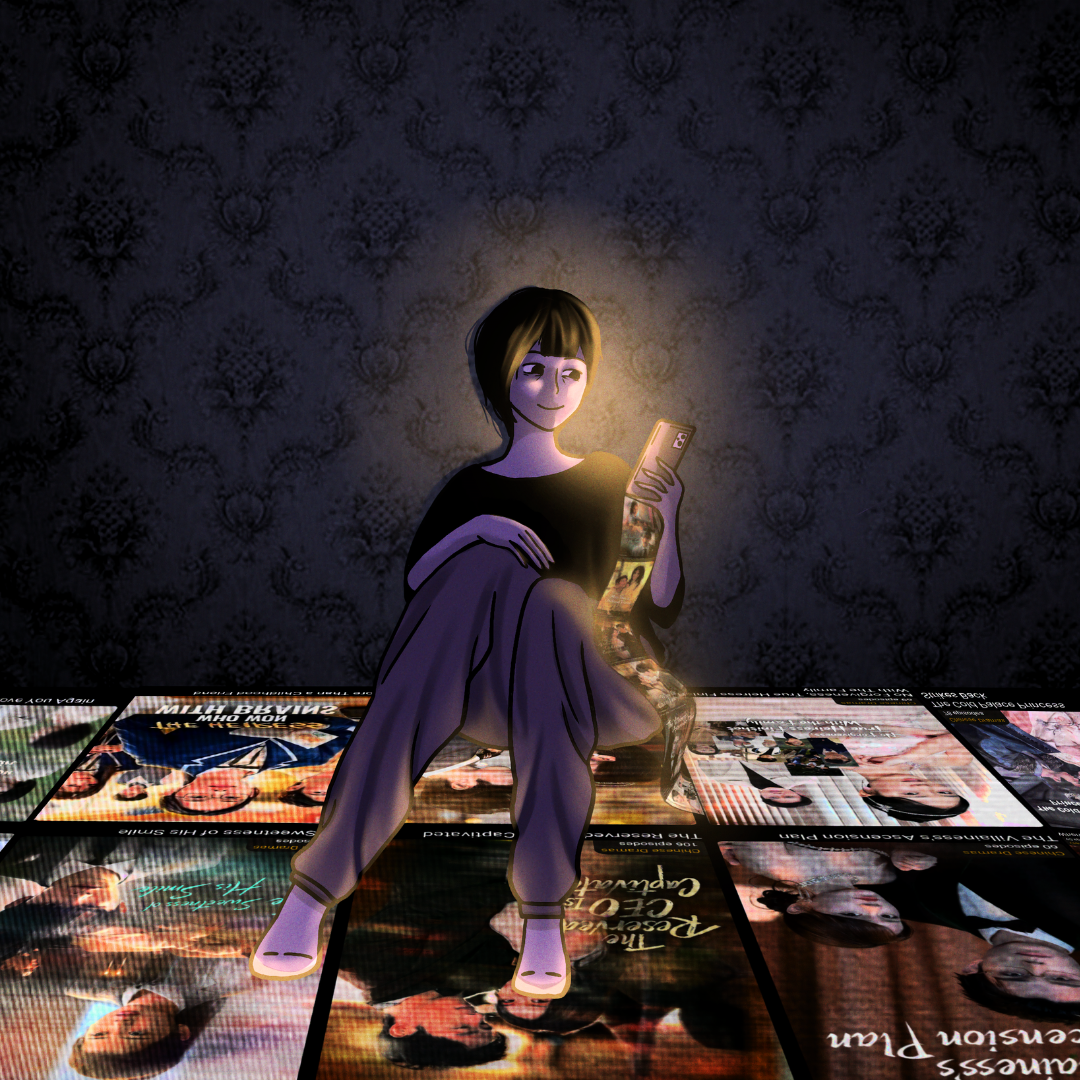
This became a reason why closeted sapphics are seated in just one spot in every family reunion, talking secretly with her girlfriend through her phone with little to no brightness at all to avoid being suspicious.
How ironic it is for some of the families to think of it like this, while they are the ones who rant to their children that marrying a man is such a stressful act.
Moreover, a paper on LGBTQ+ experiences of religious trauma shared that gay men often experience religious rejection by attacking their existence as a man who does “corrupt” actions in the natural and divine law. While sapphics, on the other hand, often experience religious rejection through the “erasure” of men in the relationship, because many religious people often believe that women need a social and spiritual figure in a man.
This is why many sapphic women often hear “maybe you just haven’t found the right man yet” once they come out. The pain of men-centered perception rejects the existence of a relationship between two sapphic women.
To some, the solution for this is simple. They will choose to hide in the closet rather than hear this kind of conversation. They will simply introduce their girlfriend as their “closest friend” at every reunion, hide every Instagram story from their families, and will just say “no” when someone asks if they have a boyfriend.
Because of these Catholic-centered beliefs, the count of affirming LGBTQ+ is minimized. Statistically, The Trevor Project’s 2023 National Survey states that fewer than 40% of LGBTQ+ young people found their home to be LGBTQ-affirming.
Bury your gays
For a long time, representation was treated as the finish line because the logic seemed simple enough: if sapphic women could finally see themselves on screen, then recognition for them would eventually follow.
In a single year, GLAAD’s Where We Are on TV counted 25 lesbian and bisexual women killed off on television — a number high enough that the industry eventually gave the pattern its own name.
Dead Lesbian Syndrome is a longstanding literary and television trend where sapphic characters are killed, separated, and given tragic endings differently from straight characters.
A show can add a lesbian character to its cast and still be counted, by the end of the season, among the shows that killed her.
In the 2014 TV series The 100, the CW network decided to kill off Lexa — one of the show’s famous lesbian characters — days after she and her love interest Clarke finally got together on screen. Shot by a stray bullet in an episode that aired one season after showrunner Jason Rothenberg had spent months publicly courting the very fanbase he then alienated.
Hashtags such as #LexaDeservedBetter and #LGBTFansDeserveBetter dominated Twitter, and the backlash had eventually pushed Rothenberg to concede in a public letter that he was sorry for not recognizing the trope as fully as he should have.
That a death could generate this much outrage points to the deeper problem of how a sapphic character’s mere presence on screen says nothing about whether she is allowed to survive it — and survival itself says nothing about whether she’s allowed to be anything other than palatable.
When showrunners do let these characters live, the writing most often narrows her into what fans call the “lipstick lesbian” — femme, conventionally attractive, soft-edged enough to read as unthreatening — or a version of sapphic identity calibrated for comfort.
Butch women, gender-nonconforming lesbians, disabled women, fat women, and dark-skinned women rarely get cast as these typical shows’ heroine, because the story was never actually about her; it was about how easy she is to look at without feeling implicated.
Bottoms (2023) is the rare title that suggests audiences were never the obstacle that critics have assumed they were. Emma Seligman and Rachel Sennott built a film around two unglamorous, fight-club-running lesbian teenagers — and instead of treating their relationship as a prelude to tragedy, the film made it the engine of the comedy itself.
Critics responded warmly, earning the film a 91% positive score across 226 reviews on Rotten Tomatoes and praising both its lead performances and its willingness to embrace the raunchiness most teen comedies reserve for straight characters.
“There’s still so much potential for different kinds of queer stories on screen in genres we haven’t seen before,” Seligman had said in an interview.
Seligman had also shared the film’s hurdles of how she and Sennott faced a string of rejections while pitching the project. They were often not even allowed to properly present the concept to studio executives, specifically because of what insiders flagged as the alienating risk of an “overtly sexual, lesbian premise.”
The film that studios nearly refused became exactly the kind of box-office and critical success. Yet the lesson never seemed to stick. Negative assumptions about the marketability of sapphic stories often survive even when there is evidence that disproves them.
Philippine media offers less material to critique — only because there is so little of it to begin with — and that absence is its own form of burial.
Yes, Filipino sapphic films and series do exist, but they circulate at the margins and never given the network promotion or primetime slotting that a straight romance receives. They are not killed off the way Lexa was; they are simply never let onto the main stage to begin with.
It teaches a young Filipino sapphic, scanning their television for someone who loves the way she loves and coming up empty, that her love does not yet have a language anyone has bothered to broadcast for her.
Even the rare productions that do reach a wide audience can find that audience turning hostile the moment sapphic representation becomes explicit.
When Bridgerton gave its fifth season to Francesca and her eventual female love interest Michaela — who was originally a male love interest in its book series — segments of the fandom that had spent four seasons rooting for the show’s straight pairings balked at watching it be handed to two women.
Just clear proof that mainstream tolerance for sapphic stories often comes with conditions, enforced as much by audiences as by the networks that produce them.
For all the progress measured in ratings and reports, the underlying question is simply, how much space is a sapphic woman allowed to occupy before her presence begins to feel excessive?
Keep the sapphics visible enough to count, but never so visible that she can no longer be contained. If she cannot be killed, she can be softened. If she cannot be softened, she can be sidelined. And if she cannot be sidelined, she can be treated as a controversy.
The industry did become far more sophisticated than a simple stray bullet through the chest, but apparently, it still finds ways to bury its gays.
But I’m a Sapphic
None of this resolves into a tidy arc where the erasure ends and an easier love arrives to replace it.
The sapphic women who’ve been fetishized, killed off, prayed over, and written out of their own families are not waiting on the other side of some cultural threshold for a permission to be happy.
Most have already learned to live within the contradiction.
When Chappell Roan talked openly about the hostility that accompanied her visibility as a queer woman, she pushed back against the idea that queerness owes the world a performance just because it happens in public view.
Her refusal to perform queerness as a polished, easily consumable spectacle for straight approval had further proved the truth that being recognized is not the same as being understood.
Despite all of it, sapphic women keep building lives inside the strain. They learn how to grow intimate without making themselves entirely available and how to keep choosing each other while the world insists that what they have is temporary or ornamental or something up for interpretation.
Somewhere in the world right now, a woman is dimming her phone screen at a family dinner before anyone can glance over. Somewhere, a girl is scrolling for some reflection of herself and finding not enough of it. And somewhere else, two women are reaching for each other anyway because the reaching has always mattered more than anyone’s permission.
Refusal becomes the stubborn insistence that love can remain real even when the world withholds the mercy of understanding it. The weight stays, and so does the wanting, and so does the life that gets built around both of them.
After every attempt to contain this love, define it, market it, sand down its edges, or put it out entirely, it stays exactly in the hands of the women who were never supposed to be burned for simply loving.
A world can spend generations trying to set sapphic love on fire and still find, in the ashes, that it has only succeeded in drawing its portrait.