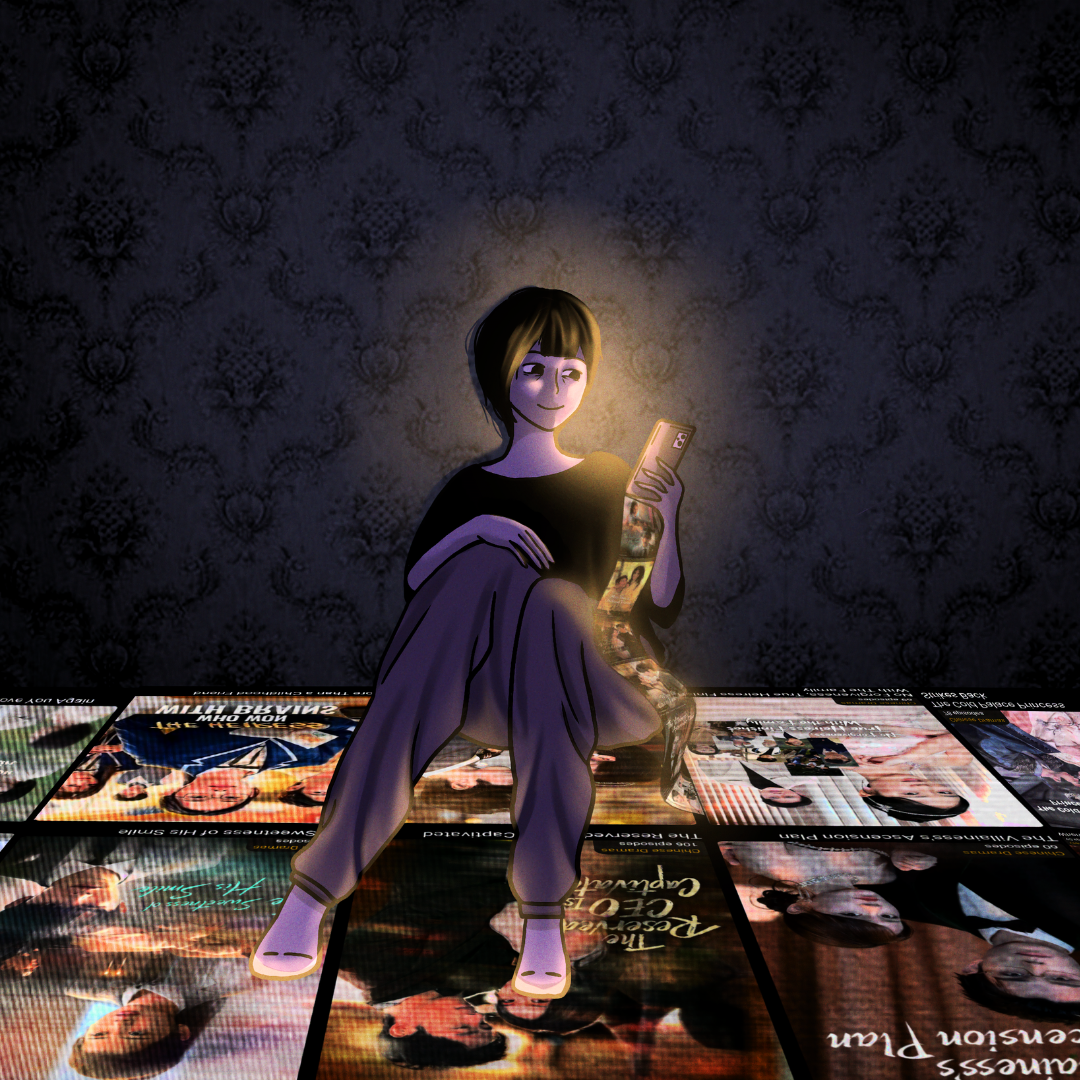
Do you enjoy watching strangers eat, fight, cry — living under 24/7 surveillance, confessing their wounds to a camera, and being judged based on how well they perform?
The good news is you’re not alone. The bad news? The producers of Pinoy Big Brother (PBB) are fully aware of it.
What was once packaged as a platform for human authenticity has turned into a cash cow; one that capitalizes on engineered struggle, parasocial relationships, and the illusion of participation.
Every vote, every confession, every vulnerable moment is part of a meticulously designed system that transforms human experience into spectacle which then turns into profit.
It taps into Filipinos’ psychological desires: to relate, to influence, and to escape a society that often renders them invisible. To feel in control when life outside — the one riddled with rising costs, instability, and injustice — offers little agency.
And in exchange for that fantasy, it asks for something seemingly small: just ten pesos for ten votes. But multiplied by millions of viewers, that small sacrifice becomes something enormous: a billion-peso capitalist machine.
A Parasocial Trap
The roots of Filipinos’ fixation run deeper than stan culture. In a country where kapwa — shared identity and mutual empathy — anchors social life, PBB replicates both the warmth and watchdog gaze of a barangay on primetime.
This inclination to bayanihan culture further extended when, for the first time, once-rivals ABS-CBN and GMA have sealed the deal to launch “Pinoy Big Brother Celebrity Collab Edition” as part of PBB’s 20th anniversary, featuring artists from talent agencies ABS-CBN Star Magic and Sparkle GMA Artist Center.
The duo-feature this collab season, each composing a Sparkle and Star Magic artist, added with both ABS‑CBN and GMA’s respective brand names Kapamilya and Kapuso, flatters this impulse: every housemate is marketed as a cousin we must protect, a black‑sheep ate we can lecture, a bunso we will “save” at any cost.
This is clearly evident in the gradual formation of this season’s “Pamilya De Guzman” — a found family within the house. Led by Klarisse de Guzman, affectionately called “mowm” by both housemates and viewers for her maternal nature, fans have since recognized its core members: Shuvee Etrata, Esnyr Ranollo, Will Ashley, and Mika Salamanca.
What started as a simple bond has grown beyond just a concept, eventually forming an official fan club on X with around 12,000 followers, even gaining recognition from the eliminated housemates themselves.
The confession room, meanwhile, resonates with the present generation’s habit of public contrition: we are accustomed to sins aired, tears shed, and forgiveness granted before a rapidly growing digital space.
“Reality shows like PBB appeal to Gen Z because they mirror how this generation lives — always online, always watching and being watched,” noted sociologist Nino Leviste.
The screen is a two‑way mirror: as we watch the housemates’ every move, we refine our own online personas, courting likes with equal vigilance.
Leviste added that the appeal of it goes beyond its televised drama. For many Gen Z viewers, it offers the sense of being part of the story. Through voting, social media engagement, and watching confessionals, audiences don’t just observe the show — they feel that they actively shape its outcome.
Economic uncertainty sharpens the attachment. One of the Big Four duos — a term used for the final four pairs competing for the grand winner title — Esnyr Ranollo and Charlie Fleming, or “CharEs,” have captured the hearts of many because of their shared role as breadwinners.
A reality not just reflected in their partnership, but one that deeply resonates with thousands of Filipinos who quietly carry the burden of their families’ struggles on their shoulders.
“Mababayaran na namin ang utang namin kahit pang-4th lang kami,” Esnyr said. “May pang-tuition na tayo!” Charlie added after they were announced as the first official Big Four duo.
Their words struck an emotional chord with the public, such as one post by social media user Kairo Sy referencing the moment having since garnered around 300,000 reactions on Facebook.
The show offers a compact morality play: work hard, offer virality, and the public will lift you out of poverty. It is a rags‑to‑riches model perfectly tuned to a nation where social mobility is rare and aspiration must find detours.
Pay to Play, Lose Anyway
Not only are the producers familiar with the underpinnings of Filipinos’ parasocial fascination with PBB — they know that it is its lifeline, the emotional engine that drives financial gain.
What began in 2005 as one P2.50 SMS vote per SIM has mutated into an unlimited‑vote marketplace powered by the digital-wallet partner Maya. Ten votes cost P10; five hundred cost P500; flash promos whip fans into a timed buying frenzy. Every click that feels like solidarity is actually a micro-transaction.
During the Gen 11 finale alone, fans racked up 2.26 million concurrent livestream views — each viewer nudged, tote-board style, to “top up” before the cut-off. Each click, each “Save” button, masquerades as solidarity — when in truth, it’s just a micro-transaction wrapped in emotional urgency.
But while everyone is invited to vote, not everyone’s vote counts equally.
The numbers that truly decide eviction nights arrive from a fraction of that crowd: well‑funded stans and private patrons who can drop six, even seven, figures without blinking.
While the total official amount spent every eviction night remains confidential, some official fan bases of housemates in the 2025 Celebrity Collab season have released their transparency reports.
Individual fan clubs of Shuvee Etrata and Klarisse De Guzman released ₱1.1 million and ₱1.6 million respectively, on top of contributions from casual viewers. Yet, a combined fund nearing ₱3 million still wasn’t enough to save them from eviction.
If each duo is able to accumulate this much per eviction night, one can only wonder just how much the production is actually raking in.
Netizens have even coined the edition “Paldo Big Brother,” pointing out that the outcome now tilts toward the fattest wallets rather than the broadest consensus.
The imbalance is not new; it has only become friction‑free. In 2017 a Maymay Entrata supporter carried 10,000 SIM cards — roughly ₱200,000 worth of load — in zip‑lock bags to guarantee her bet’s victory. Today, thanks to digital bundles, that same bankroll vanishes behind a QR code.
Seemingly unsatisfied with the millions of votes, PBB takes its capitalistic game a notch higher with the return of its infamous twist: the “Big Brother Evict” or BBE, a vote-to-evict mechanic.
With this, the show profits not only from supporters rallying behind their favorites, but also from frustrated fans who have developed animosity toward rival fandoms and even the housemates themselves — a move that stands in stark contrast to the very idea of “collaboration.”
The new mechanic has further added fuel to the fire, particularly with how BBE has impacted the final rankings. A Facebook post by Kino Marinay, captioned “Lintik lang ang walang ganti!” alongside a photo of duo AZ Martinez and River Joseph (AzVer), referencing the unlimited vote-to-evict system, has racked up over 42,000 reactions.
Meanwhile, an X post from a Dustin Yu and Bianca de Vera (DustBia) supporter has also made rounds across social media platforms, showing thousands of 500-peso bills accompanied by a card that reads “BBE RAWI,” targeting the final duo of Ralph De Leon and Will Ashley.
The show’s mechanics claim to democratize choice. In reality, votes are not cast equally; they are bought, scaled, and weaponized. It is not the will of the people that wins, but the weight of their wallets.
Star Maker, Profit Driver
In that light, PBB doesn’t just sell a story — it sells access to influence. It monetizes the human urge to be a part of something bigger than oneself.
The show’s genius lies in how it weaves capitalism into its very narrative logic. Sponsorships are not just passive placements, they are plot devices. From Cream Silk hair challenges to Lazada add-to-cart tasks, brands are embedded into the housemates’ daily rituals, ensuring that every tear, triumph, or trouble unfolds against a backdrop of consumer exposure.
But the machine doesn’t stop there. The show doubles as a manufacturing plant for fame — what Rolling Stone Philippines calls “the country’s most reliable star-maker.”
Contestants are chosen not just for relatability, but for marketability. The goal is not to discover talent, but to manufacture it — rapidly and cheaply. They exit the house and slide neatly into teleseryes, endorsements, or hosting gigs, regardless of talent or skill.
Take Sofia “Fyang” Smith for example, the champion of Pinoy Big Brother: Gen11. Despite being labeled by some as the “least deserving” big winner, she managed to stay relevant in the media. From the viral “Nasaan si Fyang?” to “Ayaw talaga!” memes, she’s now making waves with a new album and a concert.
Shuvee Etrata, a recently evicted Sparkle housemate, has also risen to stardom following her PBB stint. From around 185,000 Instagram followers before entering the house, she now boasts over a million along with major endorsements, including a deal with Mang Inasal.
It is a low-risk, high-reward labor for the network; materializing the logic of why spend millions cultivating artists when you can crowdsource a fanbase and monetize them on Day 1?
And yet, the public cheers. Because they voted for them. Because they “helped build” them. But what is that vote really worth? Who truly reaps the reward?
Certainly not the voter, who parts with tens to hundreds of pesos per tap in exchange for fleeting agency. Not the evicted housemate, who might exit the house with nothing but an emotional hangover and a few thousand new followers.
Even the so-called Big Winner, crowned under the glitter of confetti and sponsored logos, walks away with a house, a car, and a million pesos — a generous prize, sure, but a drop in the bucket compared to the billions the show generates season after season.
Neoliberalism Within Kuya’s Walls
At the heart of PBB is a simulation of real-life struggle; one that mirrors neoliberal labor conditions and demands but replaces paychecks with votes and sponsorship.
Inside the house, contestants wake up to the same pressure loop each day. They are isolated, monitored, and tasked with challenges that mimic corporate team-building and productivity metrics.
A failed task meant no weekly budget, which meant literal hunger — a consequence not far removed from the food insecurity many viewers face outside the house.
Take Gen 11’s brand‑sponsored tasks: one challenge had female housemates quiz over haircare knowledge from Cream Silk experts; another demanded they replicate wigs‑and‑makeup transformations for a pampering reward sponsored by Cream Silk and Pond’s.
In another task, contestants were pressed to sell products live on Lazada’s platform during a “9.9 Mega Sale.” Housemates became affiliate sellers, complete with team targets and performance metrics.
Such tasks act as brand activations — unpaid corporate labor — with contestants performing the roles of marketing interns and viewers consuming it as feel-good teamwork.
For everyday Filipinos — working students juggling classes and jobs, delivery riders logging hour-long queues, or call center agents on night shift — the parallels are clear. The pressure to stay likable, the expectation to perform even when burnt out, the relentless gaze of supervisors or, in this case, cameras. It all feels eerily familiar.
PBB masterfully repackages the neoliberal grind as self-improvement. It encourages the belief that resilience and compliance grant rewards.
But when a pampering session sponsored by a beauty brand is broadcast as teamwork, and a live‑selling segment becomes marketing strategies, what the show is really doing is normalizing exploitative labor as entertainment.
Timed showers and sponsor-approved necessities reduce basic human needs as quantifiable in performance terms, just like billing hours, meeting targets, or delivering brand promises.
This is where the neoliberal worker is embodied: invisible until useful, disposable when inconvenient, and emotionally overdrawn.
Who Really Wins?
Season after season, a housemate claims the grand prize. Fandoms celebrate. Voting stubs pile up in digital ledgers. Paid endorsements, guest appearances, teleserye teasers tail behind contestants’ backs as they step into the “outside world.” But the greater victory still lies offstage.
Because for all its theatrics, PBB has never just been about choosing a winner. It’s about maintaining a machine.
The real beneficiaries are the producers, advertisers, and executives who harvest pockets of wealth from the emotional labor of contestants. While the viewers walk away emotionally spent, financially lighter, and ideologically sedated — convinced they’ve participated in something meaningful.
The show thrives not because the consumers are gullible, but because they are hungry: for connection, for control, for stories that reflect our struggles. But instead of offering liberation, the show trains them to accept the very systems that exploit us — to normalize surveillance, disposability, and reward only those who can remain entertaining under pressure.
The question, then, is no longer who wins inside the house, but what it costs — economically, emotionally, politically — to keep participating in a game rigged by design. So, if we must vote, let it not be for who survives the next eviction, but for who pulls the strings in the game.
Perhaps then, we can reclaim the power we keep outsourcing to systems that profit off our hunger for meaning, for agency, for change.