The streets of the Philippines were flooded with thousands of Filipinos protesting against widespread government corruption on September 21, the same day marking the 53rd anniversary of the late dictator Ferdinand Marcos Sr.’s signing of Proclamation No. 1081, which placed the entire nation under Martial Law.
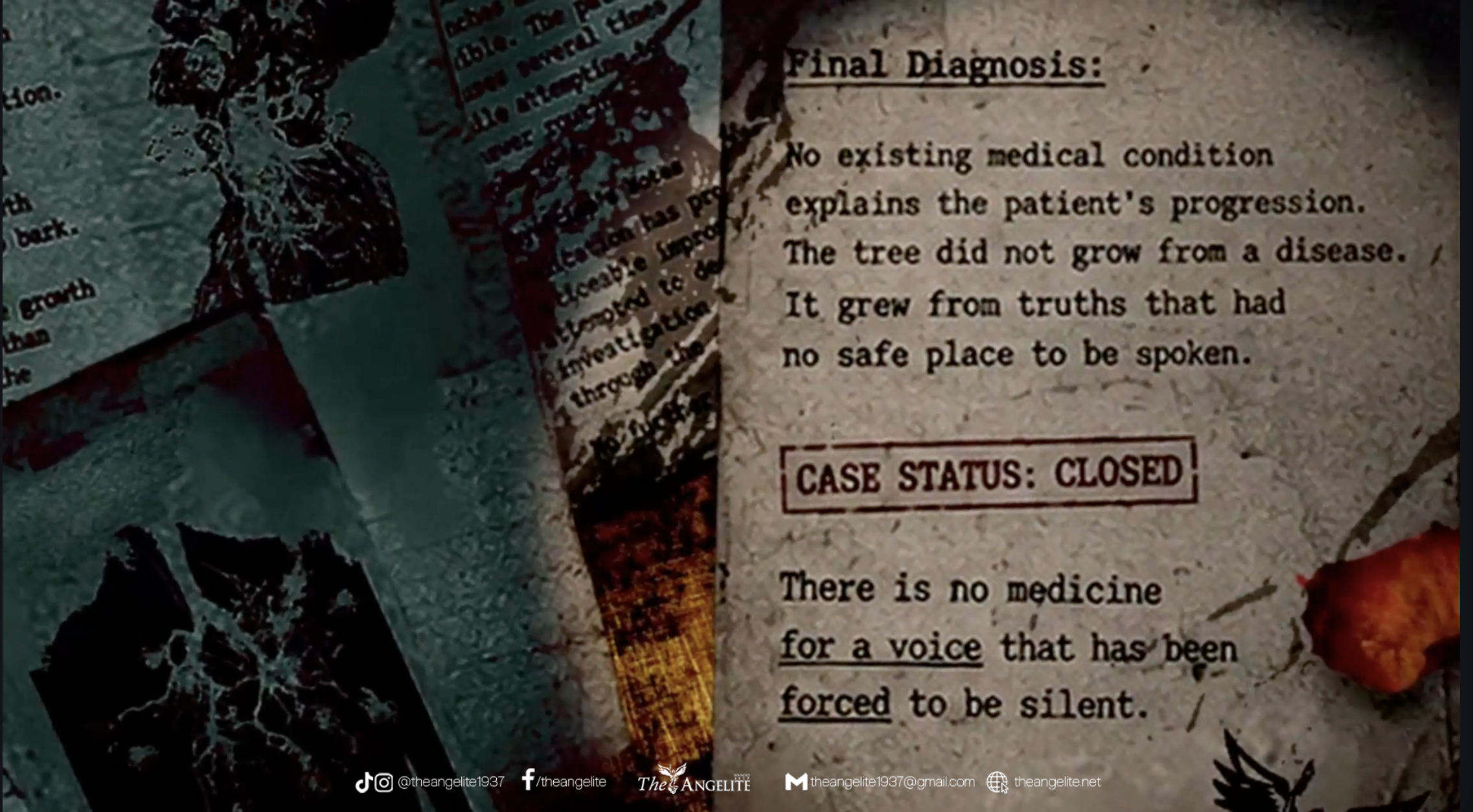
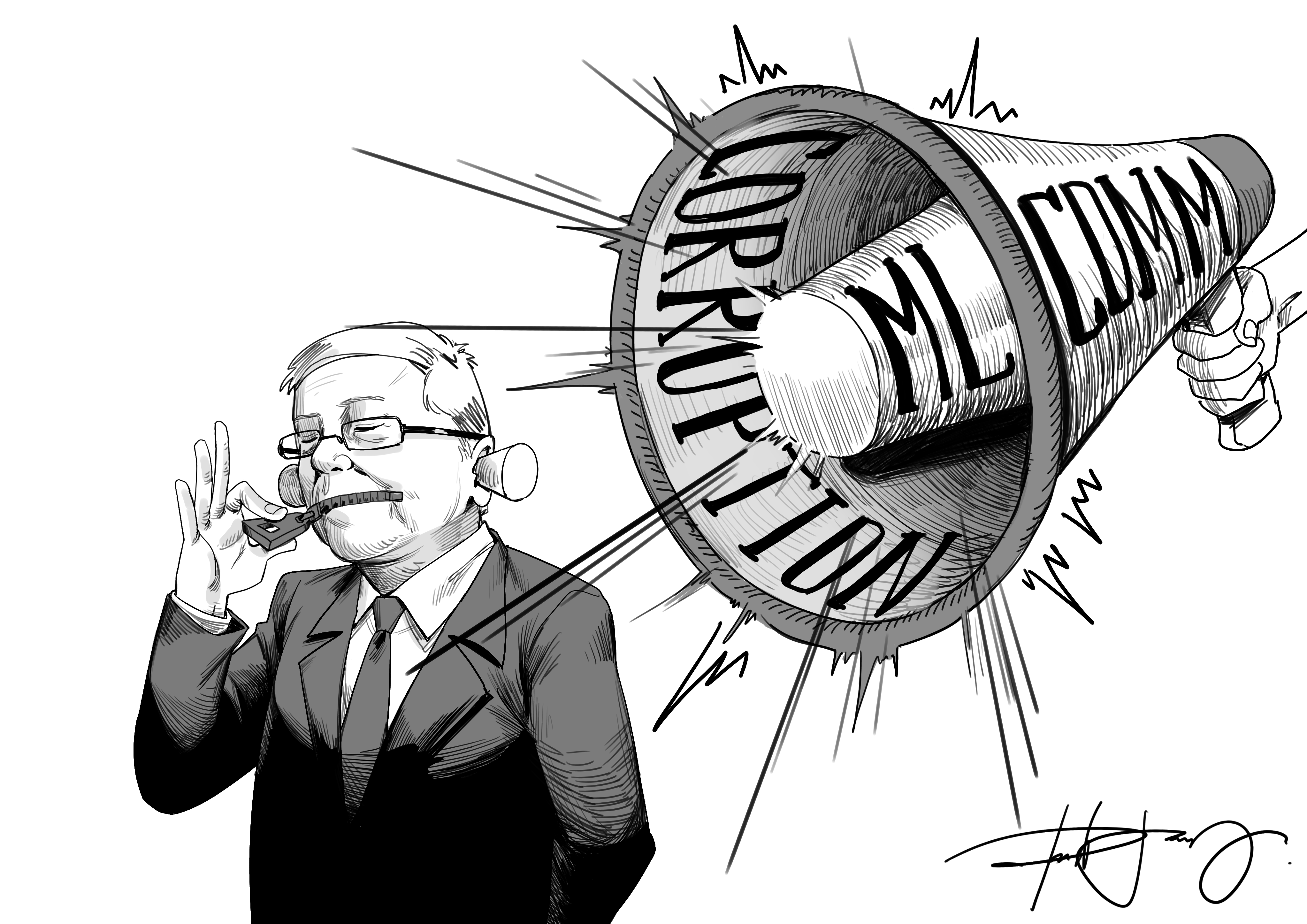
Yet as the nation clamors and raises its voice in the fight for a just future, Holy Angel University (HAU) remains silent — a silence that speaks volumes, laying bare the contradictions between its professed Catholic values and its inaction at such a crucial time.
To contextualize, the demonstrations came in the wake of revelations about ghost projects in the Department of Public Works and Highways (DPWH) and other alleged irregularities within the agency, issues that have prompted individuals and organizations, including higher education institutions (HEIs) nationwide.
To name a few, University of the Assumption released a statement condemning the anomalies in the flood control projects. Meanwhile, Angeles University Foundation marked the day of nationwide protests by launching its legal aid clinic, offering free legal consultation and assistance as part of its “continuing commitment to community service and social responsibility.”
In Manila, the University of Santo Tomas commemorated Martial Law by lighting its Main Building, the Arch of the Centuries, and the Santisimo Rosario Parish in red — a tribute to the victims of human rights violations and other “various excesses” of the regime.
Ateneo de Manila University likewise urged its community to join the “A Trillion Peso March” as a stand for “truth, transparency, and accountability” amid the flood control scandal.
Adding to these voices, University of Asia and the Pacific President Philip Yeung condemned corruption as a form of theft and a “betrayal of the Filipino people,” calling to demand accountability from public officials.
And then, there was HAU — opting to post nothing more than an online-sourced photo with the quote, “The power of the people is much stronger than the people in power.” No context, no statement, no stand, no call to action.
Surrounded by fellow Catholic-founded universities that uphold the same mission of serving society and have used their voices to denounce blatant corruption and systemic issues in government, HAU’s silence becomes all the more conspicuous.
Scattered across the university are HAU’s mission and vision statements: a mission to produce conscientious, competent, and compassionate individuals prepared for future careers, and a vision to become the university of choice for innovative, accessible international education rooted in Catholic values and dedicated to serving communities and society.
However, by remaining silent on both the 53rd anniversary of Martial Law and the ongoing corruption issues, interlinked as the same patterns of corruption seen under Marcos Sr. are now resurfacing under Marcos Jr., the university fails to set an example for its students to be not only competent, but also conscientious and compassionate in the struggle of the Filipino people.
The irony is glaring: in 2024, HAU was designated as a Center for Human Rights Education through its partnership with the Commission on Human Rights, a recognition meant to “yield a range of initiatives and programs aimed at advancing human rights education.”
Its vision statement speaks of service to communities and society, yet the university remains silent on issues that directly affect its own students. In the wake of successive typhoons and the southwest monsoon, many Pampanga towns where Angelites live were submerged in floodwaters. These flood control anomalies cut into the very lives of its students and should have drawn strong condemnation from a university that claims to place them at its core.
And yet, Angelites themselves, as well as the HAU Teachers and Employees Union, were present in the streets of Angeles City — even right outside HAU’s own gates — marching alongside the rest of the nation in the national day of protest. Their presence proves that social awareness and the call for justice are alive within the HAU community, but remain unamplified and unsupported by the very institution that should have been leading them.
At a time when the entire nation is called to rise above complacency, silence is not neutrality but a choice to side with the oppressors — in this case, the corrupt, self-entitled government officials who betray the Filipino people every day.
HAU’s silence in the face of systemic injustice is a direct betrayal of its own core values of integrity, Christ-centeredness, community, and social responsibility. Academic excellence becomes hollow, even hypocritical, when the institution chooses indifference.
Now more than ever, silence from those with the privilege and platform to speak is far from innocent. To stay silent is to side with the status quo, no matter how oppressive it may be. For HAU, remaining tight-lipped is nothing less than abandoning Angelites in their fight for their lives, their dignity, and their future.
It is not too late for HAU to speak up.
But until then, its silence will remain a loud betrayal.