A few days into 2026, the country has already finished counting down. The fireworks have burned up, and the tables once filled for media noche are empty again. For a moment, it felt like a pause — like the year is finally loosening its grip.
And there, some people said it again “bagong taon, bagong buhay.” A clean slate. A fresh start. A collective agreement to move on.
But does the turning of a calendar reset what was stolen, what was buried, what was left unresolved? Or does it only make forgetting easier?
Some will even slip beneath the table as midnight approaches, quietly eating twelve grapes—one for each month of the coming year—wishing for luck, stability, and relief. Small rituals meant to make time feel kinder than it has been.
The clock strikes twelve anyway.
While families gather and children play, others enter the new year carrying what the calendar refuses to erase. Parents grieve for the children they will never hold again. Families grieve for their loved ones because of the negligence of those in power — failures disguised as accidents, corruption dismissed as misfortune.
For them, there is no clean slate. No fresh start.
2026 did not arrive empty. It arrives carrying unresolved corruption cases, abandoned reforms, and families still waiting for justice promised years ago. Disaster survivors rebuild homes they know may fail them again. Workers face rising prices while wages remain unchanged. Communities at the margins are often seen only at the peak of disaster or violence, when headlines demand their presence, before being reduced once more to numbers as attention drifts elsewhere.
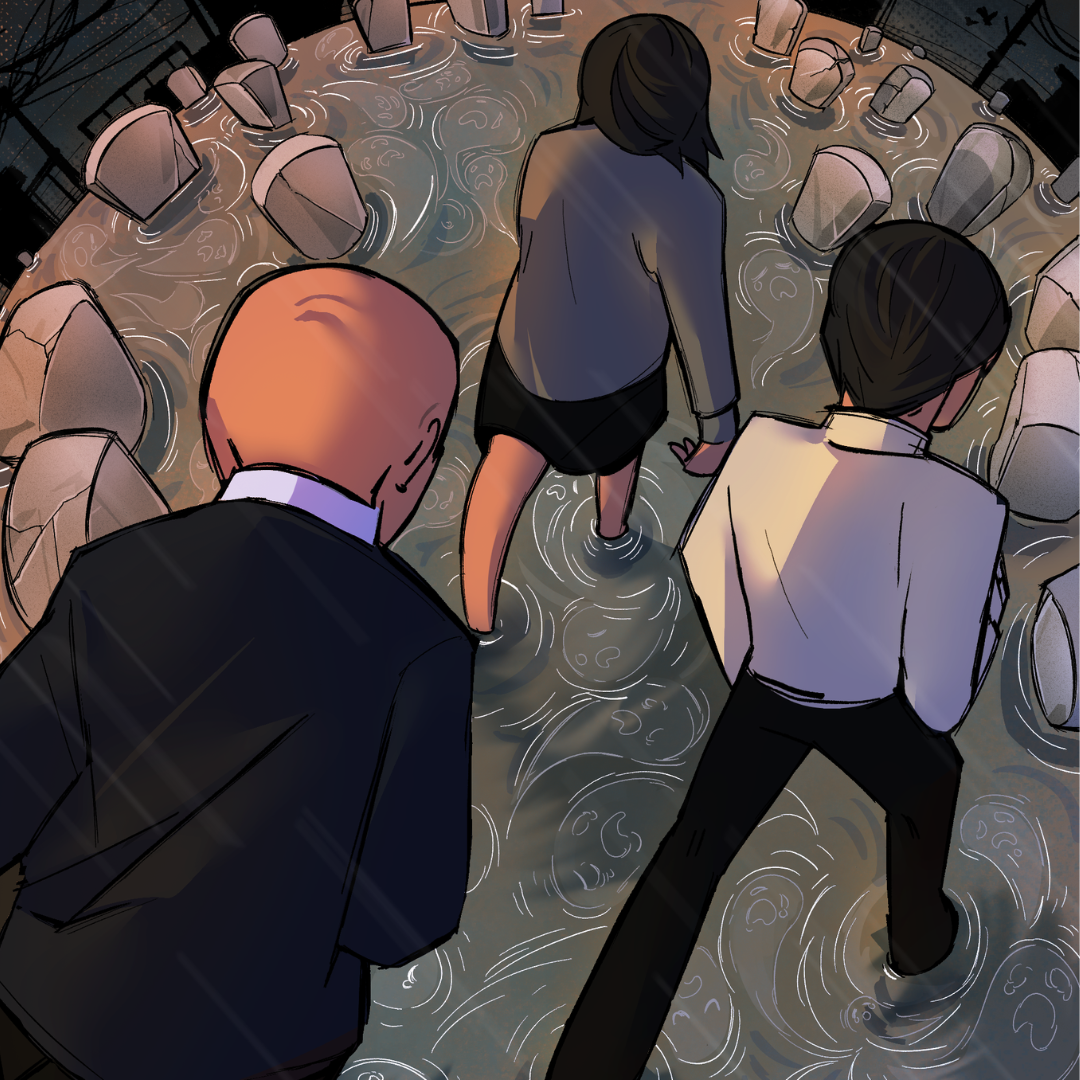
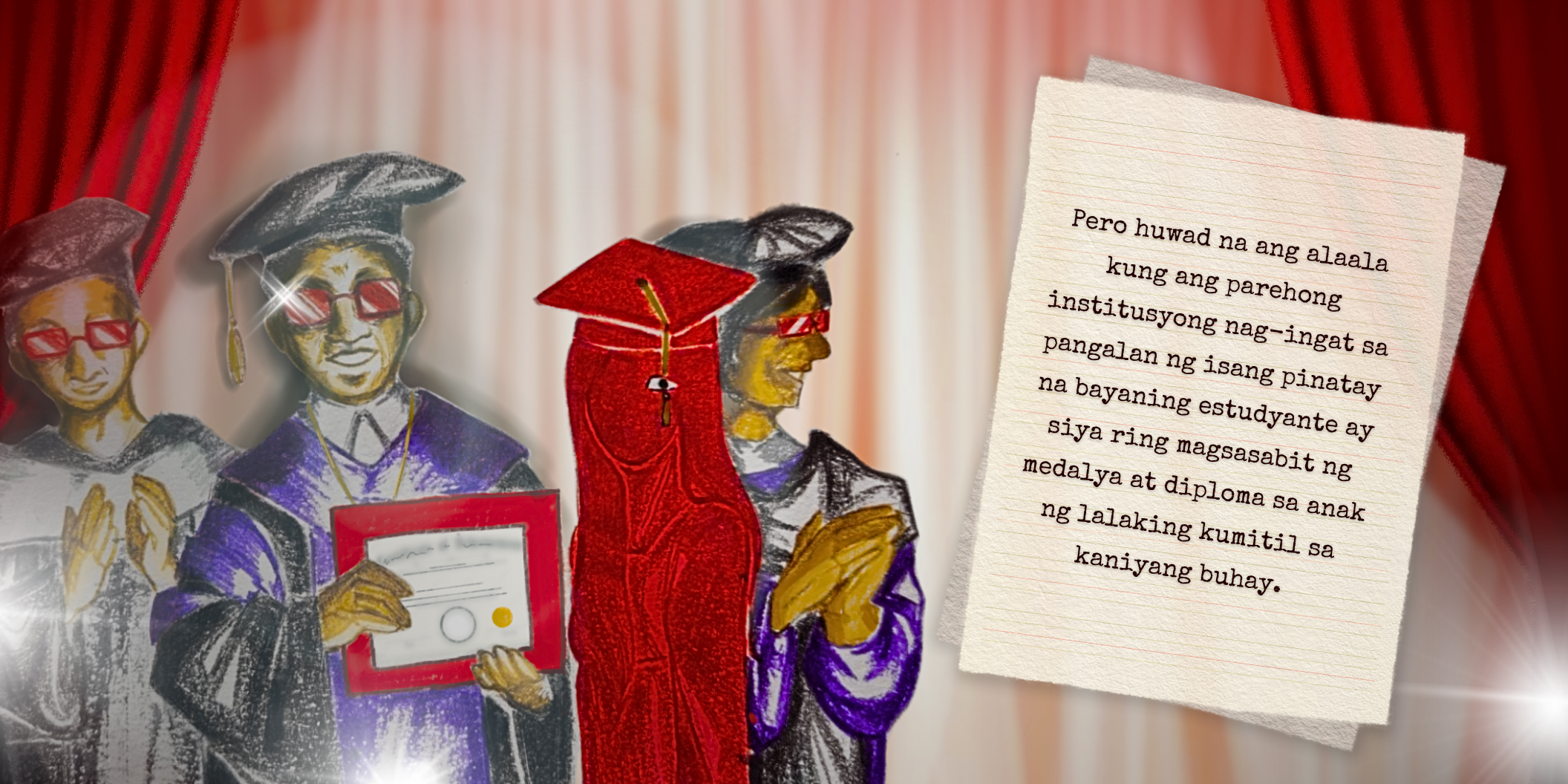
The system is built to reset itself, as seen in how political families implicated in scandals—from the Marcoses to politicians who were detained only to later return to public life, such as Juan Ponce Enrile, Bong Revilla, and Jinggoy Estrada—ultimately outlast investigations and resume power with little lasting consequence. The politics of the “fresh start” depends on forgetting. Protests flare, deadlines are announced, and hearings are called. Then the year ends. Attention shifts. Cases stall. The big fish swim free. Power survives not by denial, but through institutional clockwork.
Corruption, unfinished reforms, and stalled investigations are not isolated incidents. They are signals of a system that uses ritual and tradition to cloak evasion. Celebrations, New Year rituals, and the cultural pressure to “move on” are subtly mobilized to normalize inaction. Memory is treated as irritation. Accountability is treated as a burden.
For those on the peripheries, there is no reset. No grape can wish away stolen funds and justice. No fireworks can repair flooded homes. No “new year’s resolution” rewrites lost wages, diminished opportunities, or the justice that never came. The ritual of starting fresh is a performance that obscures systemic failure, leaving communities to bear the cost.
Counting the Year’s Blazes
As fireworks tear across the sky, while the world cheers and counts down, we must also count one by one the cases that cannot be forgotten.
Rappler compiled a report on the year’s recap, and 2025 kept throwing headline after headline across the Philippines.
From the missing sabongeros linked to illegal gambling syndicates to stalled flood control investigations, the stories of this year revealed a pattern: failed systems, lives lost, and delayed justice. Disappearances tied to illegal gambling syndicates exposed how the law bends for the influential. Those left behind mourn in silence, their grief gets drowned out by legal technicalities and institutional inertia.
Meanwhile, those who should be held accountable evade scrutiny, hiding behind loopholes while lives remain suspended in uncertainty.
The clock keeps ticking, but the big fish? They keep swimming free.
The political arena was no less chaotic. Vice President Sara Duterte’s impeachment case dragged through months of delays, procedural twists, and legal technicalities, only to be declared unconstitutional, leaving accountability unfinished. Marcos siblings’ public feud, allegations of illegal drug use, and Senate elections illustrated just how tangled political dynasties remain, often overshadowing the voices of ordinary citizens.
Another headline that shook the nation was the arrest of former president Rodrigo Duterte under an International Criminal Court warrant, charging him with crimes against humanity for his brutal drug war. Families of victims saw this as a long‑overdue reckoning, while his supporters claimed persecution, staging protests both here and abroad in his name.
The Villar family became entangled in multiple public controversies after PrimeWater faced widespread complaints over water service failures, alongside allegations that flood control projects were used as vehicles for kickbacks. Yet despite investigations and public outrage, consequences remain muted; the machinery of power grinds on.
Meanwhile, ordinary Filipinos bore the weight of these failures. Flood control scandals exposed infrastructure built with substandard materials, risking lives yet again, while protest rallies across the country demanded accountability for corruption and impunity. Protesters braved the streets to be seen and heard, yet the system remained unshaken.
The year has already opened, the noise is receding, and the headlines might start to fade. But the systems behind them persist. And for those living on the margins, there is no reset. This new year will carry the debris of neglect, greed, and silence — and the powerless will continue to bear the cost of it.
Shadows of Celebration
In the Philippines, salubong for the New Year is a time when families gather, fireworks light up the sky, and the nation welcomes a fresh start.
Yet 2025 has also become a moment for citizens to demand visibility — to be seen and heard by a system that so often fails those it is meant to protect. While the sky bursted with celebration, thousands of Filipinos were left to navigate the aftermath of disasters, corruption, and neglect.
For victims of calamities, the New Year is far from a celebration. In Bacolod City, families displaced by Typhoon Tino and Supertyphoon Uwan spent Christmas Eve on cold streets, sharing simple meals of fish, noodles, and rice — grateful not for abundance, but simply for being together.
Marites, one of the affected residents, said they no longer had the money even to begin rebuilding their home. Like many others, survival had replaced celebration. Another resident, Evelyn, also sought refuge on the streets, where she spent Christmas Eve with her family under open skies.
“Ang hirap talaga ng buhay. Kung may magbibigay sa amin, mabuti naman, salamat. Nami-miss ko na si Mama… first time na December na hindi ko kasama ang ina ko,” Evelyn said.
For some, hope was narrowed down to a single wish. Aiza, another survivor, said she only hoped to return to a proper home by the New Year. “Makabalik sana sa aming bahay para sa New Year, doon na kami,” she said.
The same story unfolded elsewhere. As Christmas lights flickered across Cebu City, hundreds of survivors of Typhoon Tino marked the holidays not in their homes, but under the harsh fluorescent glow of barangay gyms. In Talamban, around 120 individuals slept on thin mats spread across a basketball court. In Bacayan, about 250 evacuees shared crowded evacuation spaces.
These gyms, meant for temporary refuge, have quietly become symbols of how prolonged displacement is normalized. While Christmas decorations glow outside, and fireworks light up the sky, some families spend the season waiting — waiting for repairs, for aid, for a better system.
Cardinal Pablo Virgilio David said that this year “for many Filipinos, it did not feel like a year of hope at all,” citing unresolved injustices, recurring disasters, political instability, and deepening social crises.
Yet he also pointed to a less visible kind of ruin. David warned of a “quieter devastation,” where families unravel under online gambling addiction — “a disaster without floodwaters or fault lines.” One that destroys lives slowly, silently, and often without the same urgency or outrage.
For these families, the New Year does not arrive with fireworks or celebration. It comes with waiting, loss, and the unsettling truth that resilience is often demanded from those who were failed.
No Midnight Reset
Every New Year promises a reset, but corruption in the Philippines does not recognize calendars. While citizens count down to midnight, the same systems that enabled abuse, theft, and neglect continue operating — quietly, efficiently, and without consequence. Fireworks explode above us while the same hands remain on the levers of power below.
This is how power protects itself. Ghost projects surface only after disasters expose them, flood control funds vanish into paperwork, and investigations move just slow enough for public anger to tire. The system does not break; it protects. It delays justice until grief grows quiet and anger learns to sleep.
Here, the sinturon ni Hudas is not symbolic — it is operational. Those who betray public trust are rewarded with contracts, reelected with ease, and shielded by law written in their favor. Corruption is not an accident of governance; it is sustained through repetition and reward.
Legal loopholes become shields. Impeachments collapse under technicalities, court cases stretch across years until justice becomes irrelevant. The system does not collapse because it is designed to survive scrutiny, not answer to it. And while the world celebrates, those with the power to stop the suffering choose silence. Leaders who could act look away. Celebration becomes easier when it asks us to forget, when it demands cheer at the cost of conscience — and silence becomes the loudest response of all.
Even elections — hailed as moments of renewal — often reproduce the same power structures. A fresh start is promised every cycle, yet the beneficiaries remain unchanged.
This is why corruption feels endless. It adapts to outrage, waits out reform, and rebrands itself as stability. It depends on the public fatigue, on the pressure to “move on.” But empathy is not optional, and accountability does not expire with the year.
On January 1, the Isidro Project quoted the phrase “ikulong ang mga Hudas.” So let this be said without apology. Not as rage, but as resistance. Not as vengeance, but as a demand that the betrayal finally carries consequences. There is no justice in punishing those who already suffer while the corrupt are asked only for patience.
What we need now is not blind optimism, not another promise that “next year will be better.” What we need is radical hope — hope that refuses amnesia, hope that names the guilty, hope that understands that change is not promised but fought for. Hope that does not celebrate while others are still paying the price.
As Filipinos welcome 2026, the question is no longer whether Filipinos believe in fresh starts — but whether they are willing to confront what prevents them from having a fresh start.
A New Year that ignores accountability is not renewal, it is repetition.