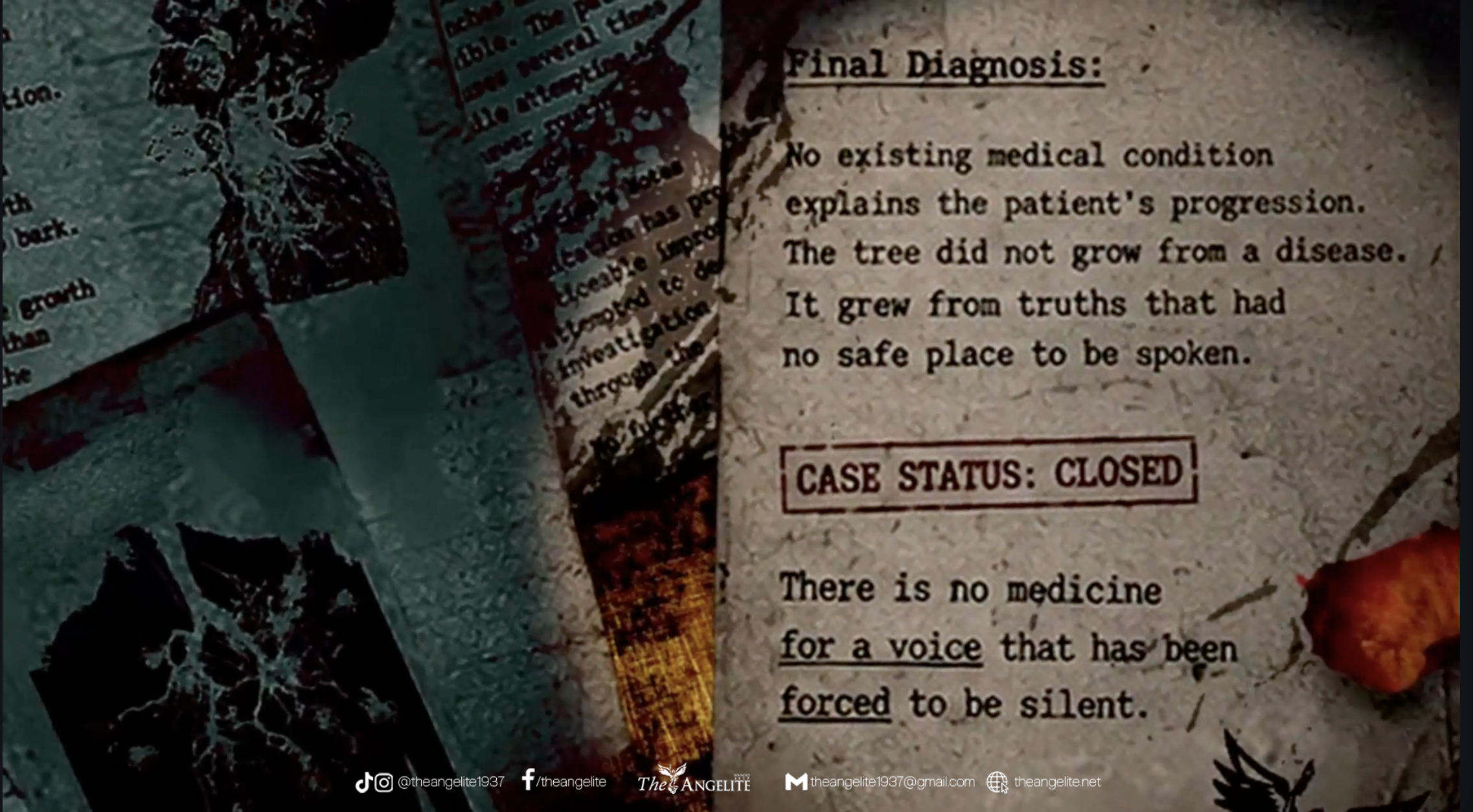
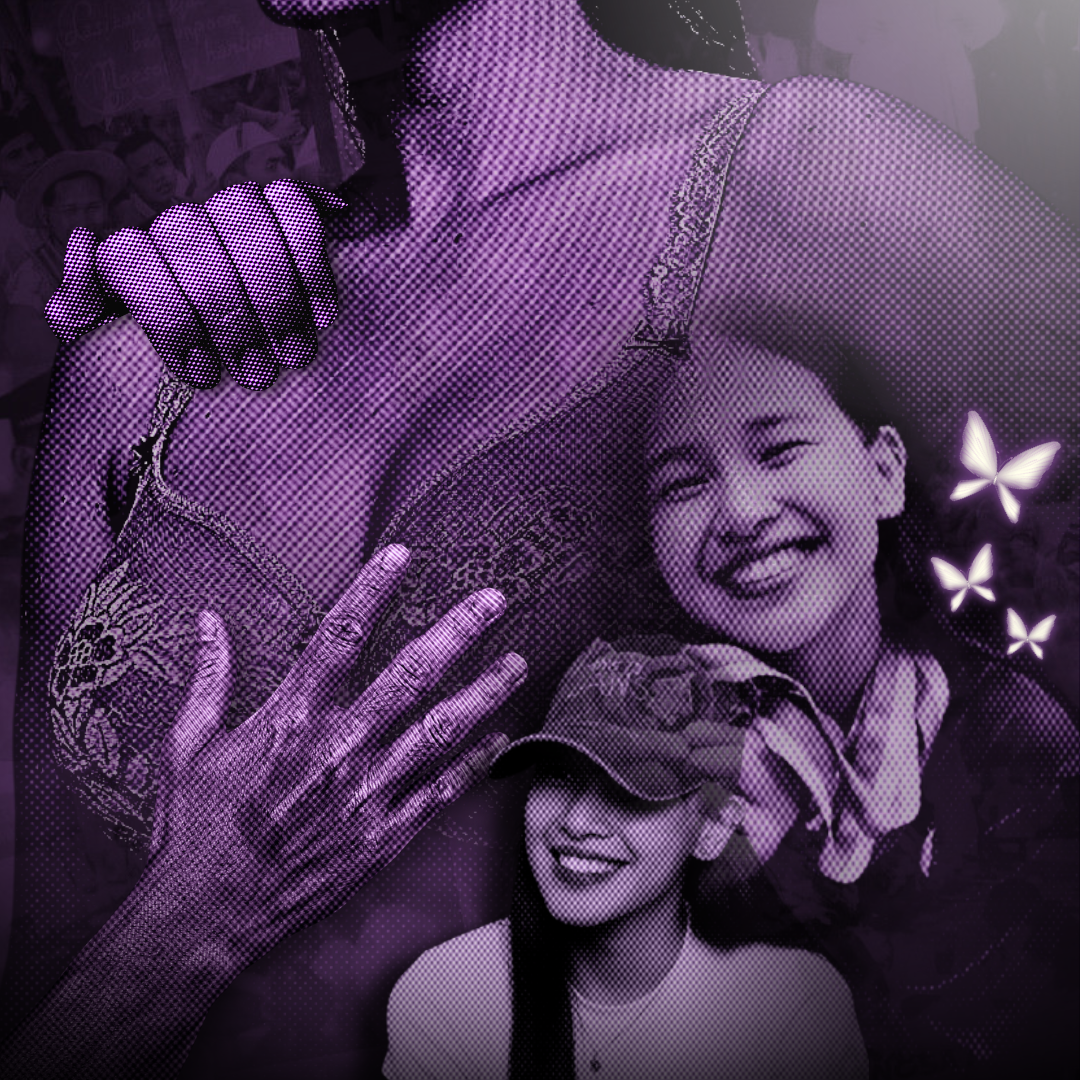
The Toboso 19 were killed in the mountains. But they were slain again. Piece by piece, in timelines and comment sections, where mockery and apathy finished what the bullets began.
Even before investigations could take shape, before facts could be tested or names fully accounted for, the public sphere had already chosen its response. Timelines filled — not with grief or outrage — but with spectacle. Jokes. Memes. Applause.
This was the case in the April 19 killings in Toboso, Negros Occidental, where community journalist RJ Nichole Ledesma and University of the Philippines (UP) student leader Alyssa Alano were killed in a counter-insurgency operation by the Armed Forces of the Philippines (AFP), alongside organizers, researchers, farmers, and at least nine individuals already identified as civilians — including a 19-year-old resident and two minors.
Human rights groups, such as the ASEAN Parliamentarians for Human Rights, and international observers have flagged the operation as potentially indiscriminate, with reports of prolonged strafing and the displacement of over 650 residents, forcing entire communities to flee.
These contradictions are not new. They follow a familiar pattern in a country where the line between “encounter” and execution has long been blurred.
And in a public long conditioned to accept that script, the response was almost automatic.
In one comment under a post of Alyssa Alano’s photo next to corned beef, a user named Errol Brion wrote: “nagka lasog2x ba katawan? tas nakiki BAKA pa. Nice one” — mocking mutilation as if it was wit. Under posts mourning the dead, thousands responded not with grief but with “haha” reactions.
GMA’s Facebook post on how UP cried out justice for Alano amassed over 43,500 laugh reactions along with dehumanizing remarks, which encompasses about 48% of the total reactions as of writing. Under the comment of netizen Misty Mendoza who asked why many reacted a laughing emoji to the activist’s death, Jose Jacosalem responded “baka mga naging biktima ng mga npa sa kanayunan kaya sila natuwa dahil nabawasan ng mga salot,” while Jay Vee Alegre replied “gnusto nya maging holiday cornbeef.”
The violence did not end with mockery. It extended into violation. Images of the dead — what appear to be taken from within a military operation — began circulating online with disturbing ease. Bloodied bodies, stripped of dignity, passed around as proof, as spectacle, as ammunition for argument.
The circulation of such images raises urgent questions: who had access to them, how they were obtained, whether they have been altered, and to what end they are being deployed. In a climate saturated with disinformation, these visuals do not simply document. They shape perception, preempt doubt, and harden narratives before truth has a chance to surface.
And where death itself was not enough, the desecration deepened. In online spaces such as the Facebook group “Boys Darker Room,” AI-generated images of Alyssa Alano began to appear — her likeness distorted into sexualized caricatures, draped in revealing outfits, stripped not only of life but of agency.
This is degradation repackaged as content: the transformation of a victim into an object, the extension of violence into the digital afterlife.
This is how death is completed in this country: first by the state, then by the public it has trained to do its dirty work.
What we are confronting is not merely insensitivity or distortion of truth. It is a politically cultivated culture of dehumanization — a condition where empathy is no longer instinctive but negotiated, where grief depends on ideology, and where a single label can exile a person from humanity.
Red-tagging is the entry point. It does not argue; it assigns. Once a person is marked — activist, journalist, student — as “NPA,” the work is done. Repetition, insinuation, and association are enough to fix identities in the public mind. In conflict zones especially, the line between who is who becomes blurred.
The label functions as preemptive justification. Evidence becomes unnecessary. Due process becomes irrelevant. Humanity becomes conditional.
Then, the dead are no longer treated as individuals whose lives stood with the masses and demanded accountability from those in power.
Activism, journalism, and student advocacy are not acts of terrorism. These forms of civic engagement are essential in a society that claims to value truth, accountability, and change, especially because they amplify voices that are often ignored or silenced.
But apathy and mockery buries that truth, that those in the mountains were not there for themselves. That they were there because of conditions that extend far beyond them — landlessness, exploitation, militarization — realities that define the lives of millions of Filipinos.
Whether as organizers, researchers, or even armed revolutionaries, their actions were rooted in a struggle that was never meant to be exclusive, never confined only to those who agreed with them.
It was, in essence, a fight for the people now taught to reject them. And yet, in death, they were abandoned by that same public — condemned, ridiculed, and stripped of dignity by the very masses they sought to serve. They were killed once by the state, and then killed again by the people who, in echoing the language and logic of power, became instruments of the same system that took their lives.
What gets buried in the process are the realities these victims have lived. Ledesma’s work in community journalism documented realities often ignored in mainstream discourse. Alano’s involvement in student leadership reflected an engagement with marginalized and oppressed communities in Negros.
This cruelty is not accidental. It is manufactured by a system that does not only eliminate dissenters, but turns the public against them.
For years, the Philippine state has expanded the boundaries of counterinsurgency beyond the battlefield. Under the Duterte regime, red-tagging was normalized, dissent was criminalized, and the language of war seeped into civilian life. Activists became enemies. Journalists became threats. Students became suspects.
This machinery redirects the blame for real grievances, such as poverty, inequality, and dispossession. Instead of confronting the structures that produce these conditions, anger is displaced toward those who expose them.
The result is a public that participates in its own disempowerment. A public conditioned to complete the second killing.
What follows cannot stop at outrage. It must be structural.
If the state claims to uphold human rights, then it must be compelled — immediately and concretely — to submit to independent, civilian-led investigation free from military interference.
This includes full cooperation with the Commission on Human Rights and the reopening of mechanisms that have been deliberately stalled, such as joint monitoring processes between the government and opposition forces, to scrutinize violations in armed conflict.
Universities cannot remain a neutral ground in this context. Academic institutions, especially those whose students and researchers are directly targeted, must move beyond symbolic condemnation. This means actively dismantling agreements that enable military presence and influence within campuses, strengthening protections for fieldwork and community immersion, and confronting disinformation campaigns that criminalize scholarship and activism.
And beyond institutions, the task extends to the public. Because this is ultimately a struggle over consciousness and morality.
To refuse the second killing is not abstract. It means rejecting the language that dehumanizes. It means interrogating narratives before repeating them. It means resisting the reflex to classify before understanding. It means restoring the instinct to see every life as grievable before labels cloud perception.
Because when lives taken without due process become a punchline, humanity is buried with them.